Higher Education

Molecular and Life Sciences Center, UC Long Beach

  • DESCRIPTION
  • PROCESS
  • GALLERY
RELATED PROJECTS
Next Previous
 

Molecular and Life Sciences Center, University of California, Long Beach

Long Beach, CA

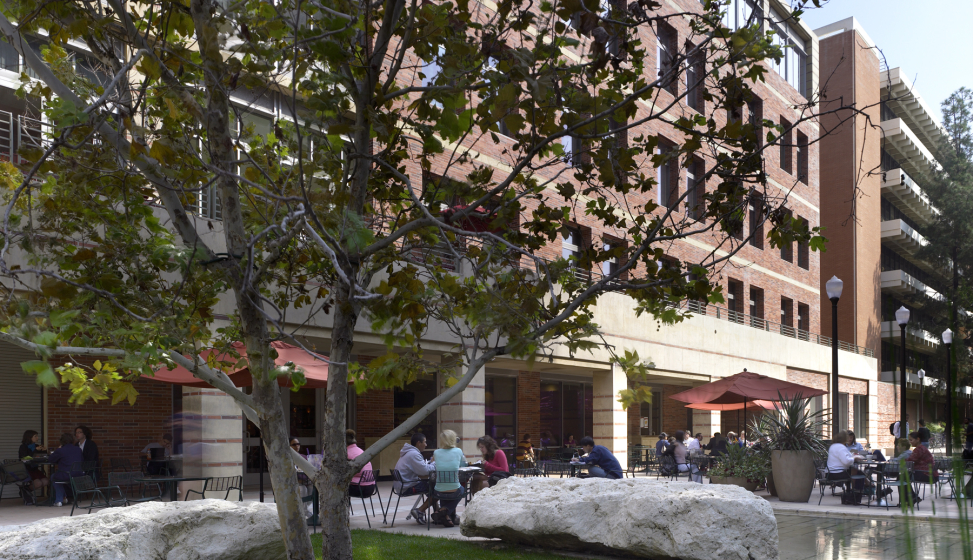
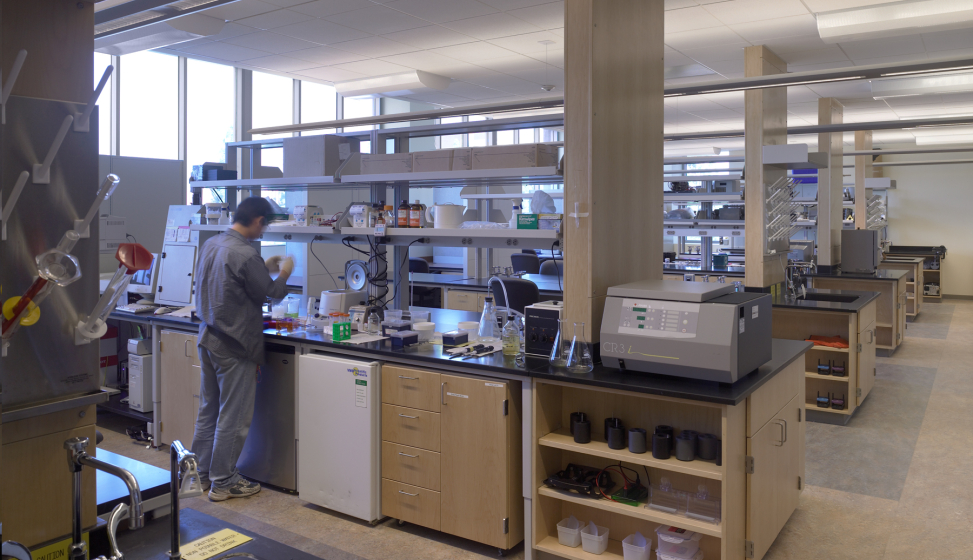
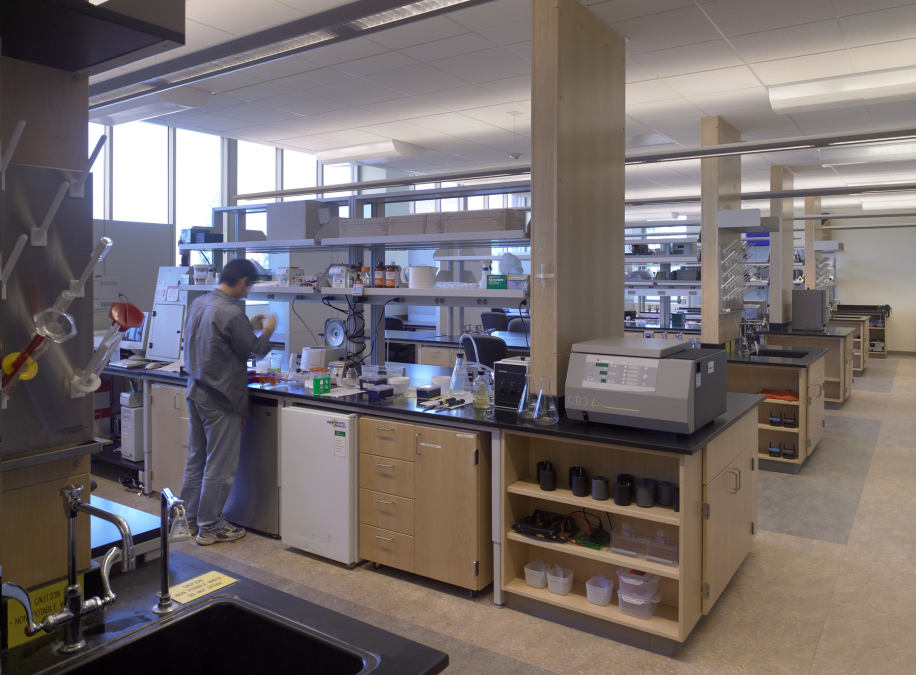
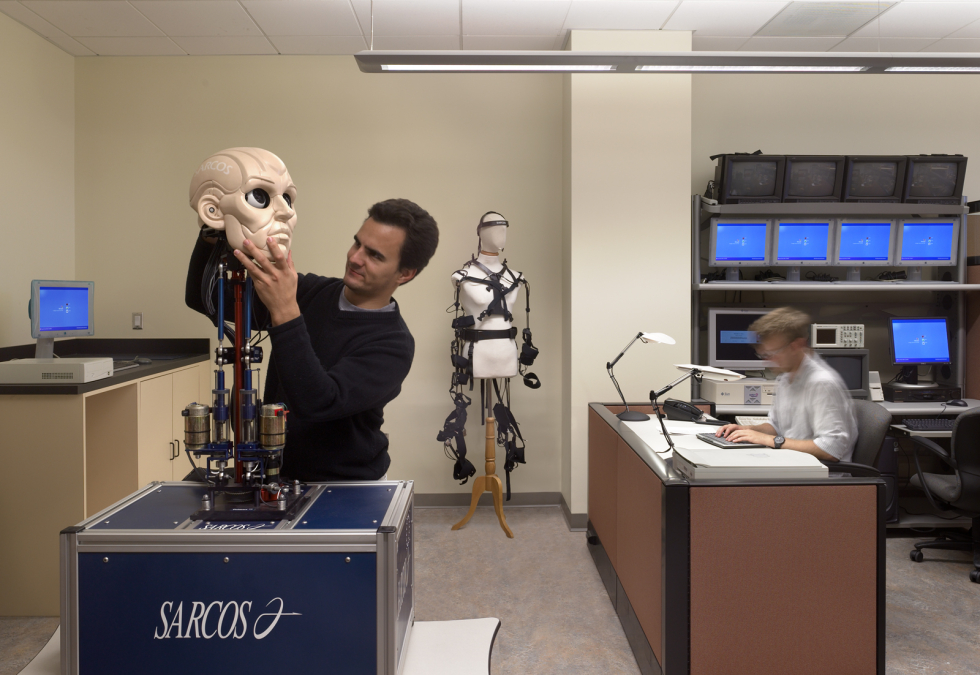
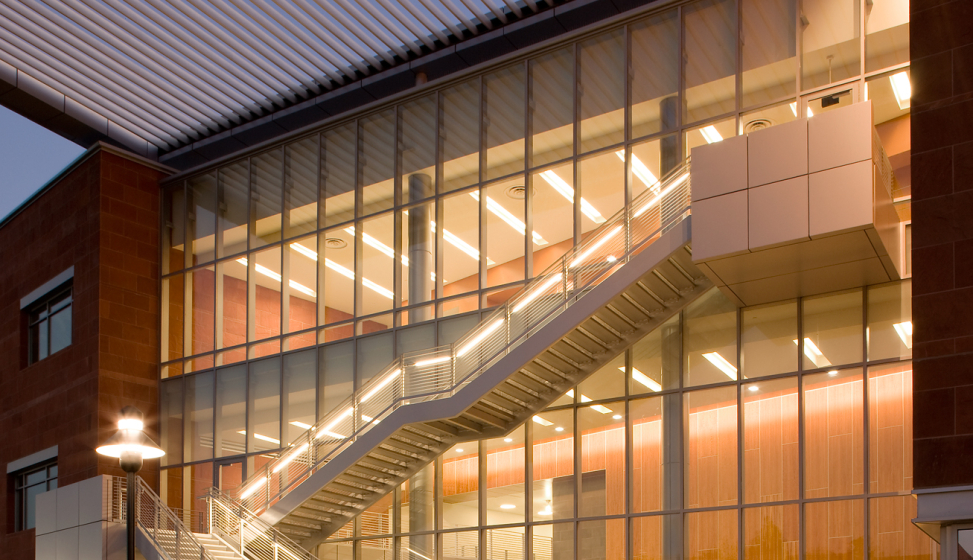
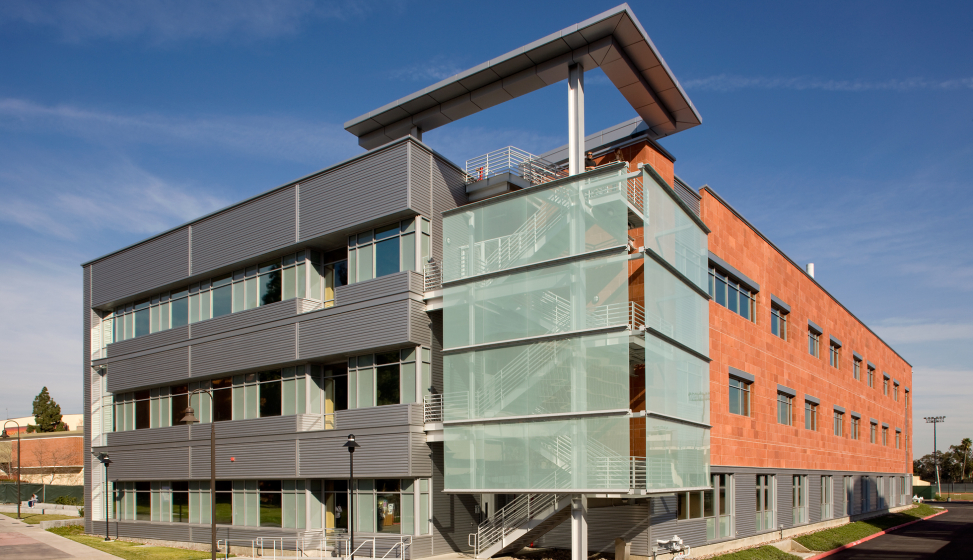
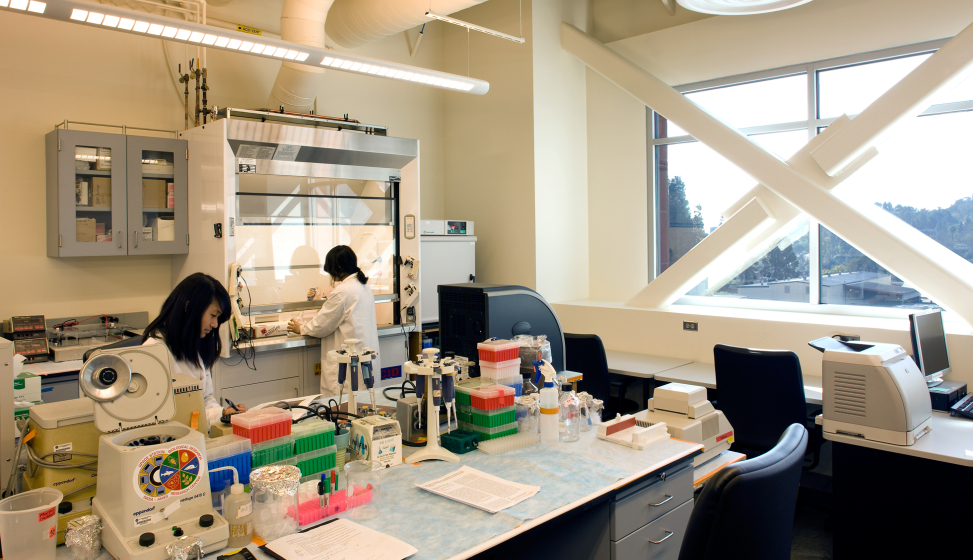
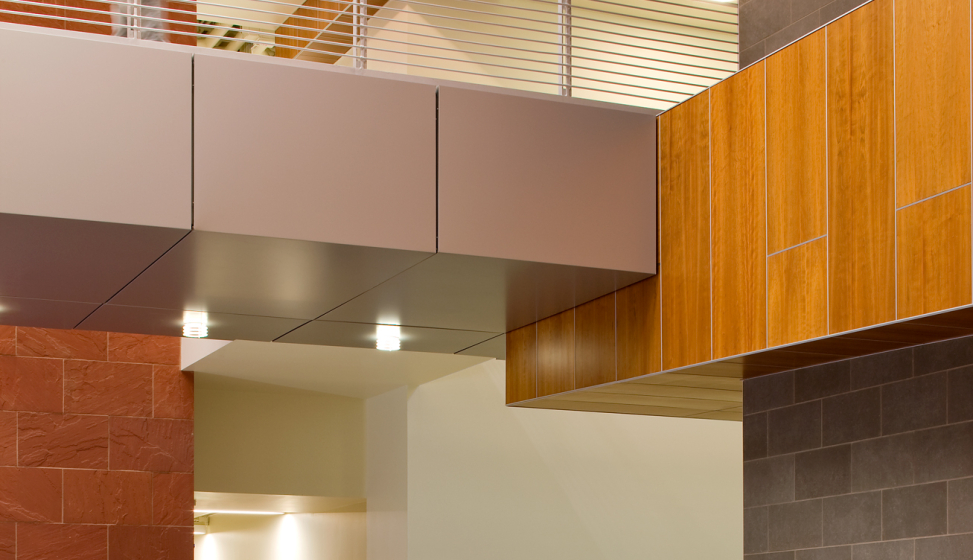
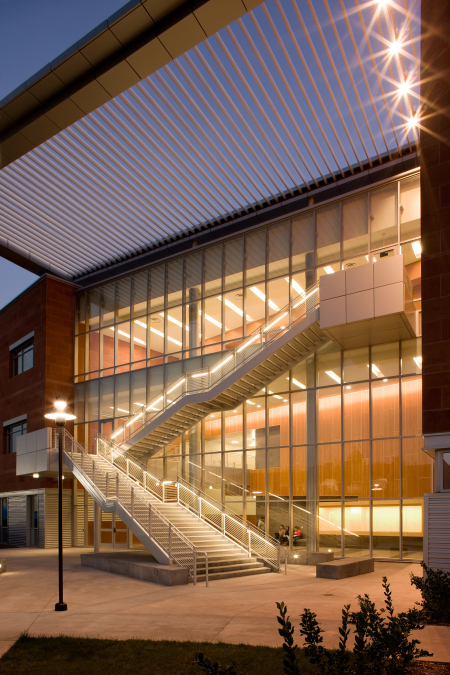
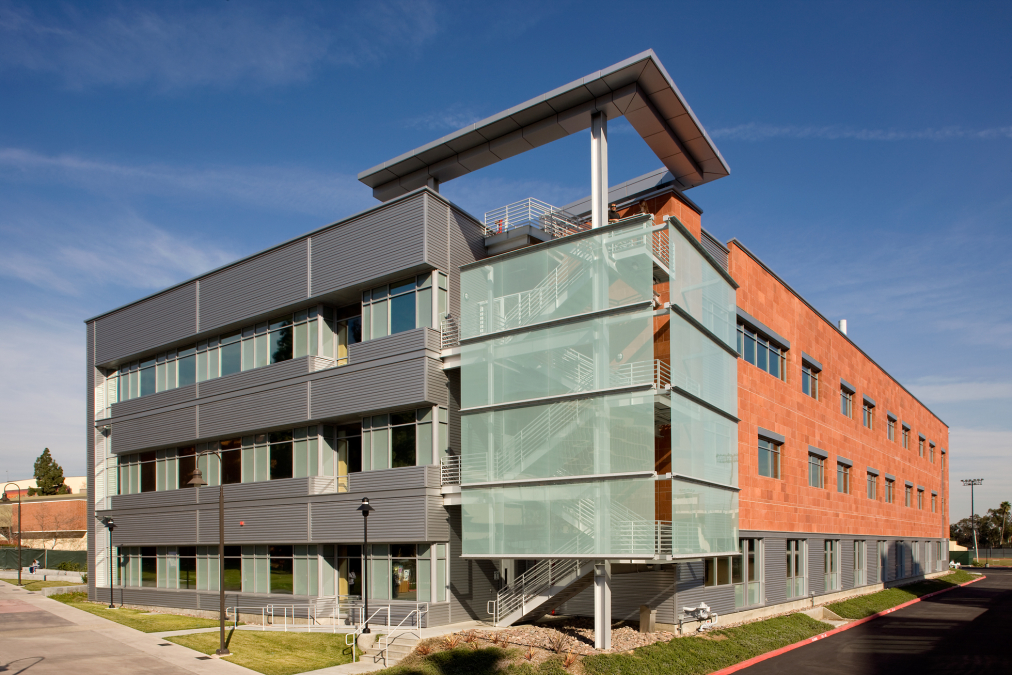
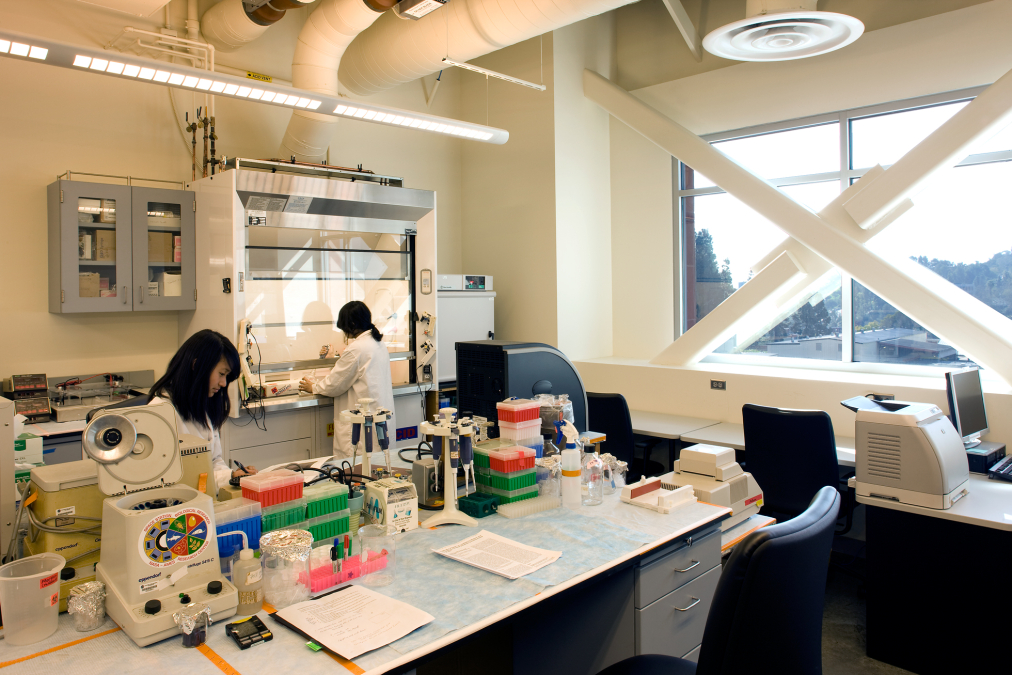
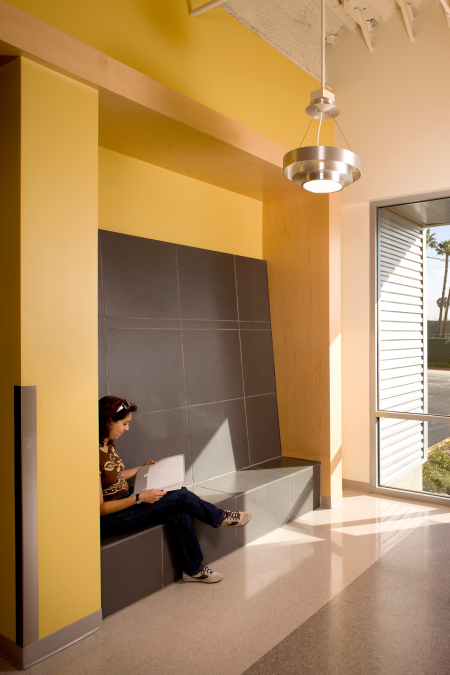
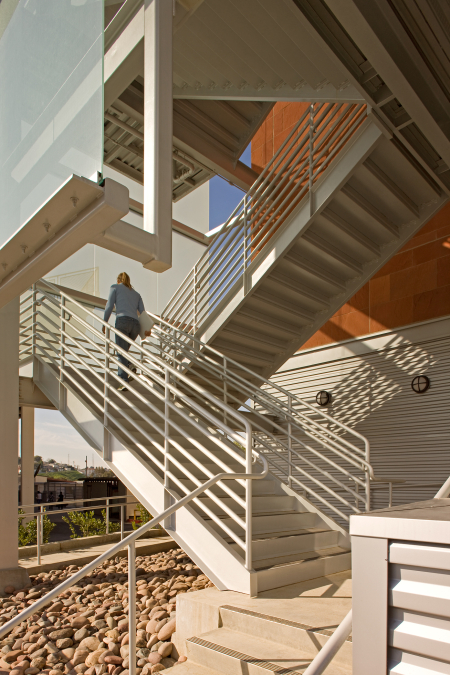
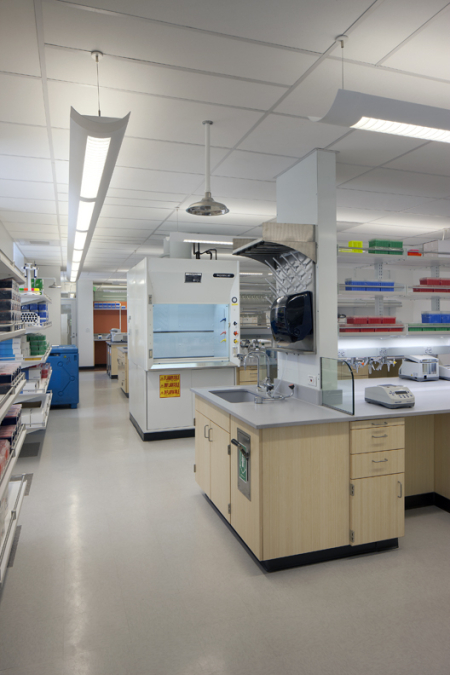
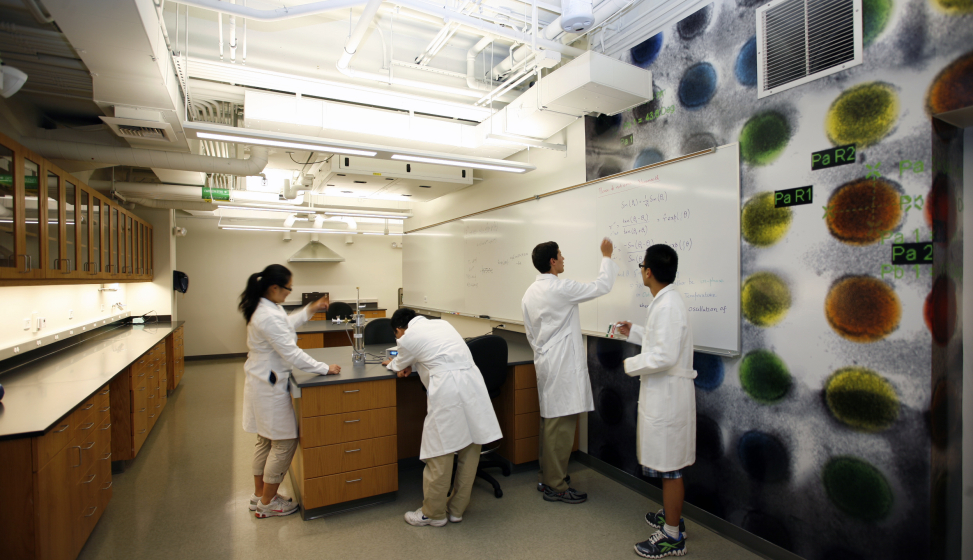
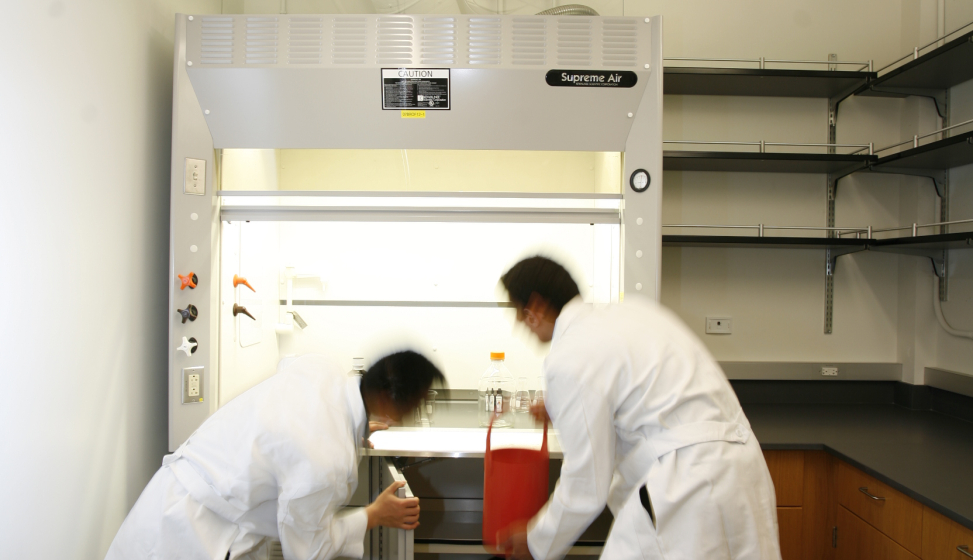
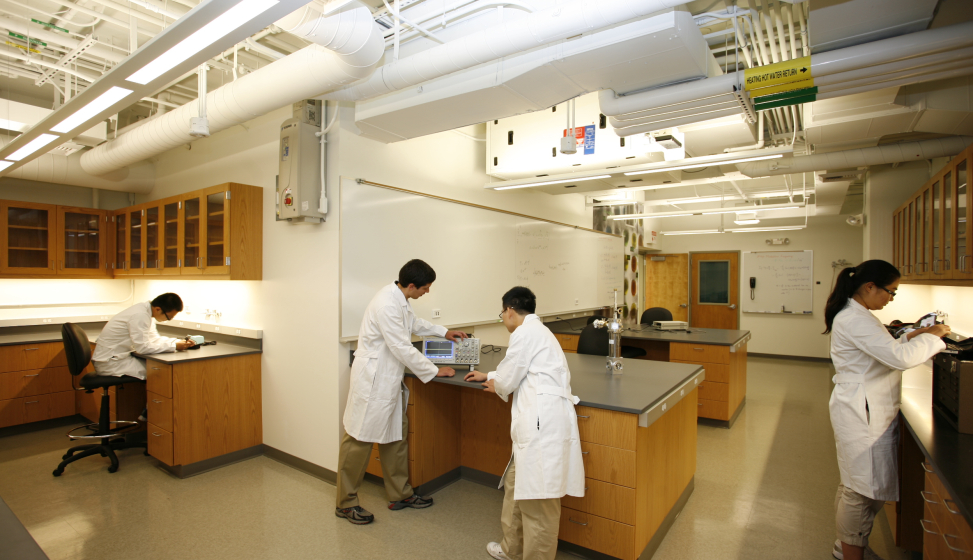
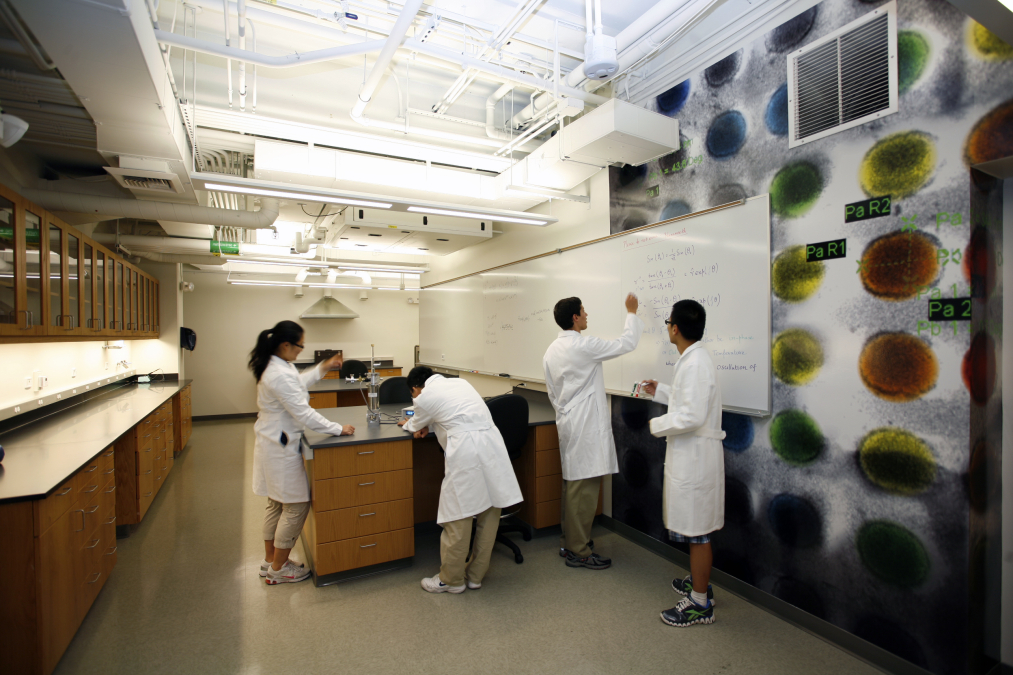
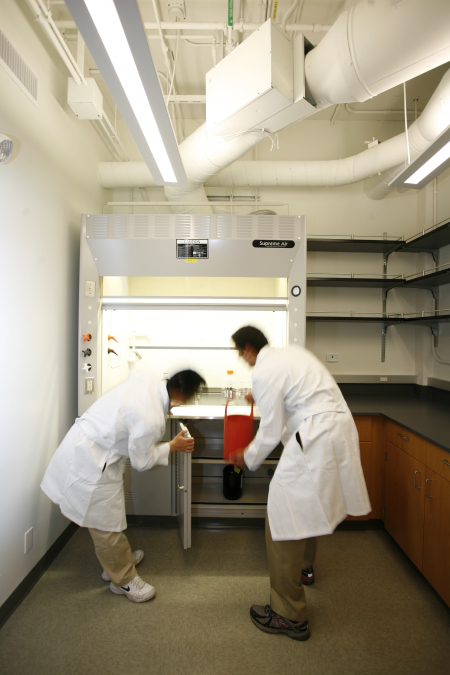
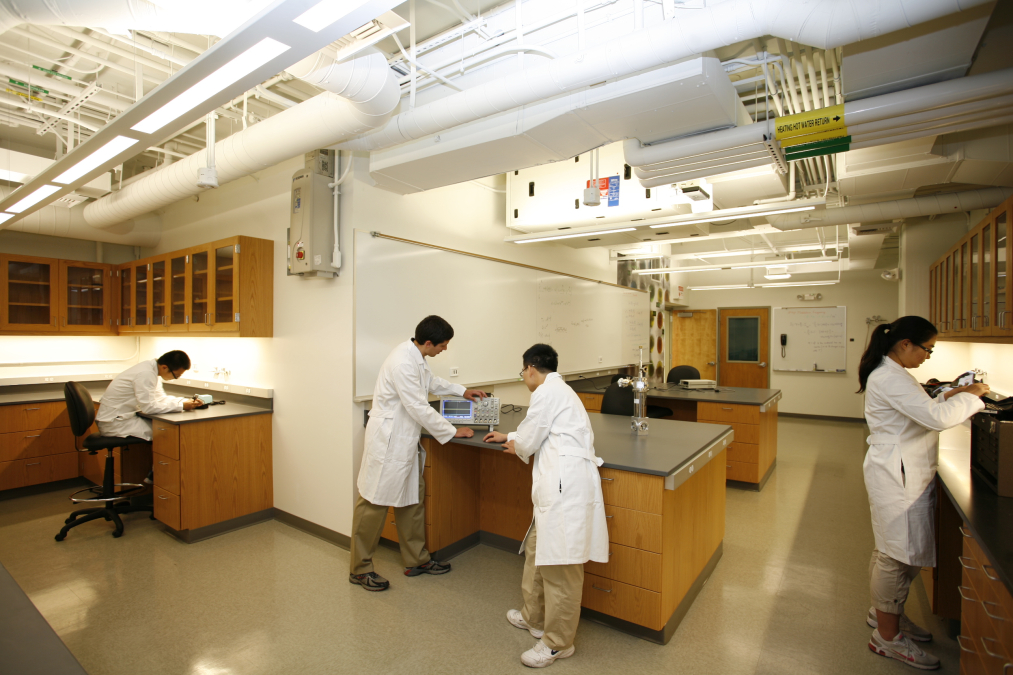
AC Martin provided architectural and engineering services for this 95,000 square foot Molecular and Life Sciences Center. The building houses biology, biochemistry, and chemistry research as well as lower and upper division teaching laboratories. Fumehoods and mechanical exhaust systems are used extensively throughout the building. In addition to an increase in capacity by 138 full-time equivalent students in teaching laboratories, 160 graduate research stations, and 46 faculty offices, this project provides the necessary relief space to permit the progressive renovation of the existing Peterson Hall 2 and 3 science buildings to proceed. Special lab functions include cell/molecular/physiology research; fluorescent microscopy center; immunology; genetics, biochemistry and chemistry.

Awards

Close

Engineering Building IV, Cal Poly San Luis Obispo
  • DESCRIPTION
  • PROCESS
  • GALLERY
RELATED PROJECTS
Next Previous
 

Engineering Building IV

California Polytechnic State University
San Luis Obispo

San Luis Obispo, California

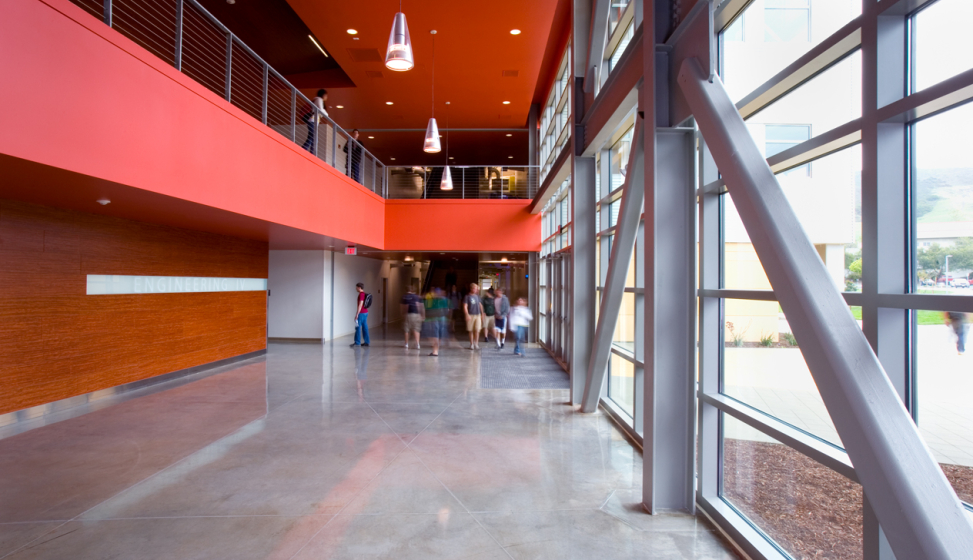
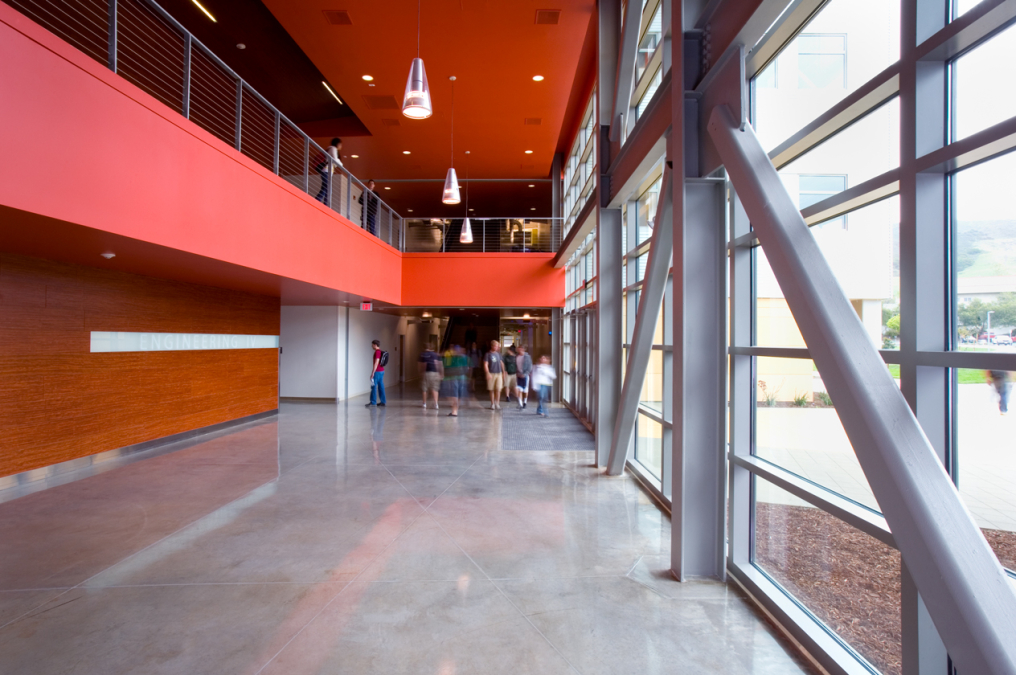
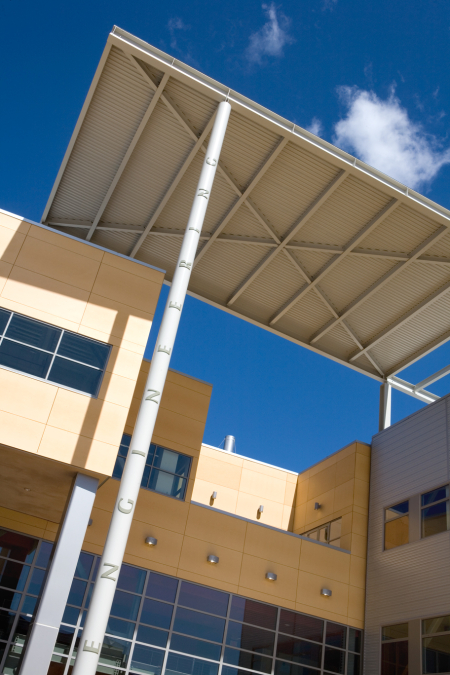
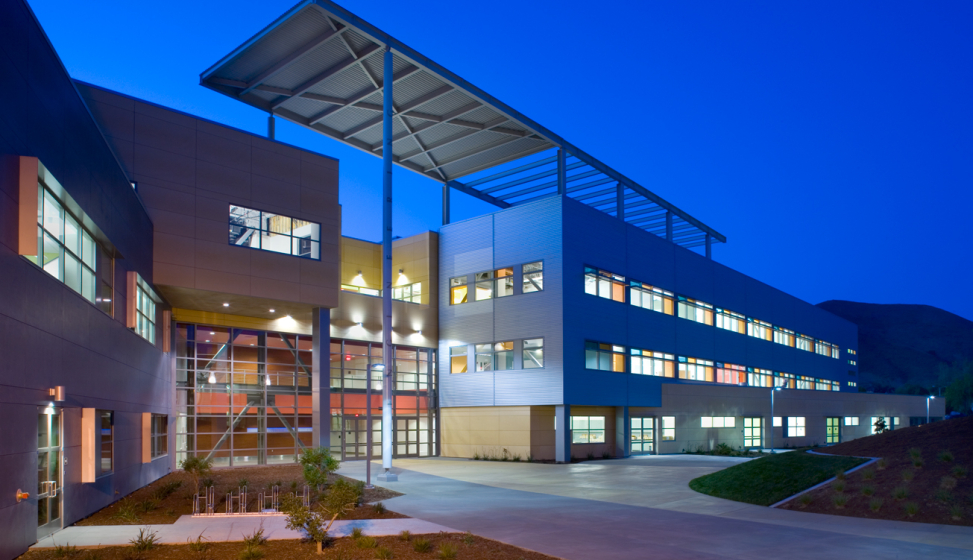
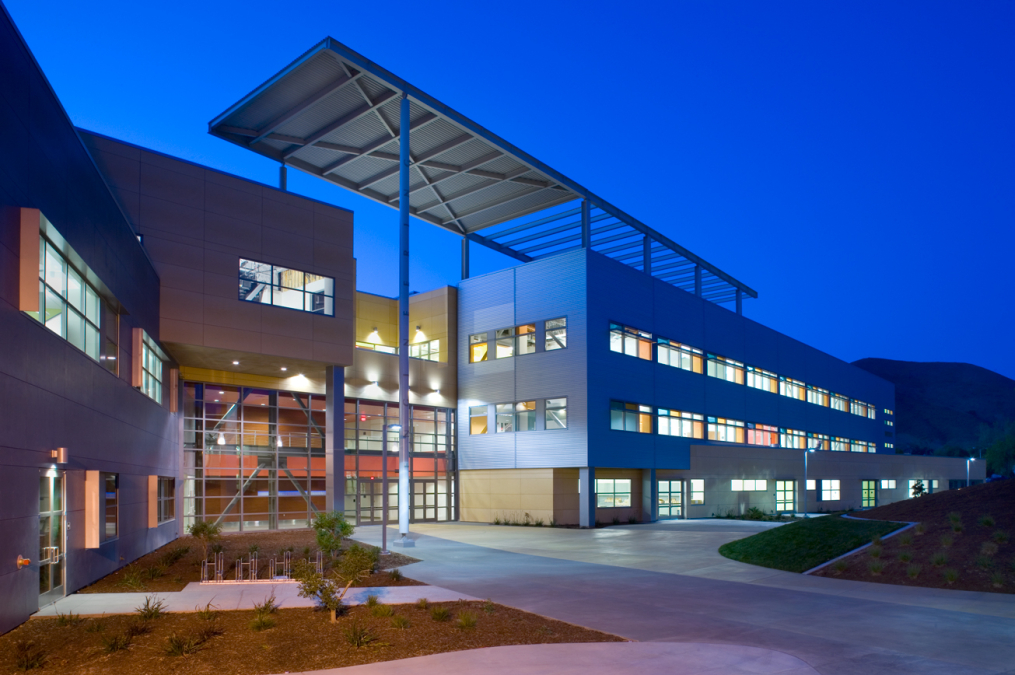
Located on the northwest edge of Cal Poly San Luis Obispo’s main campus. the building houses the departments of mechanical, aerospace, civil, materials, industrial, and biomedical engineering, as well as Dean’s offices. The design includes laboratories, lecture halls, design rooms, support spaces, and faculty offices.

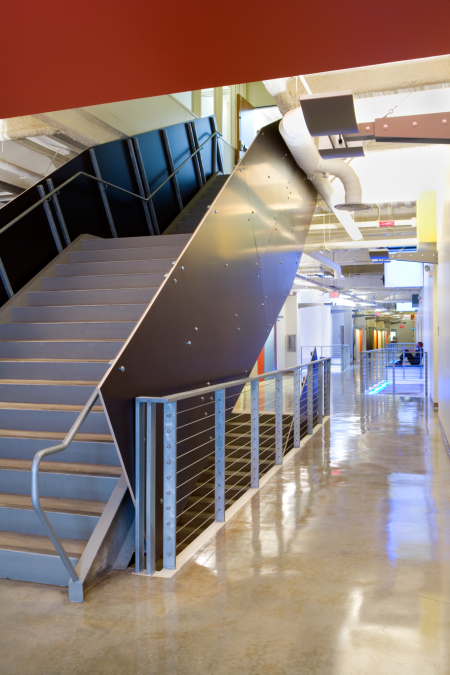
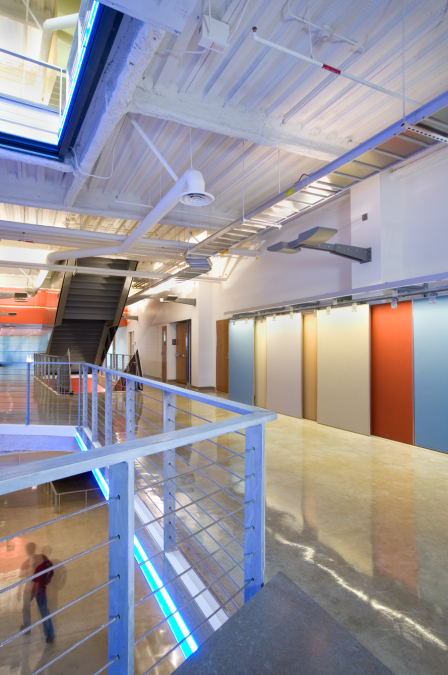
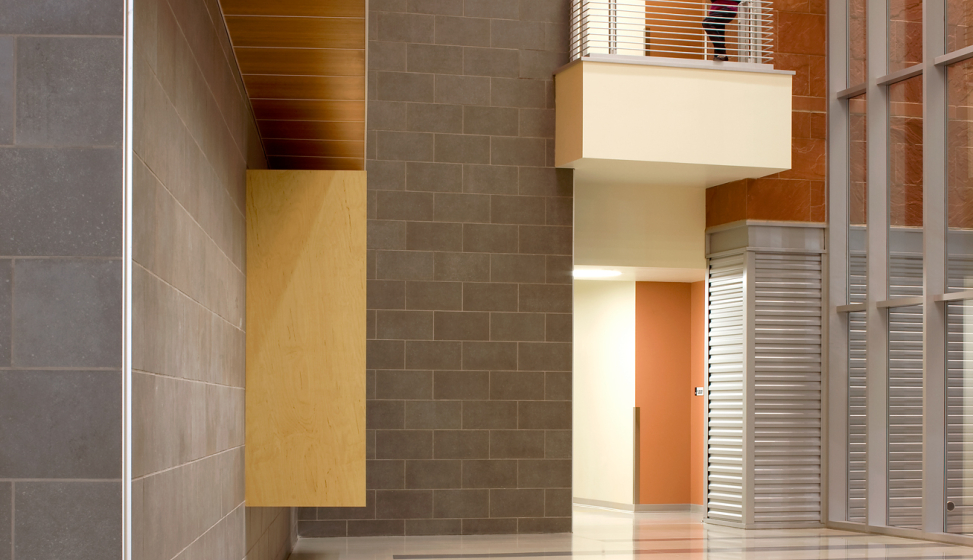
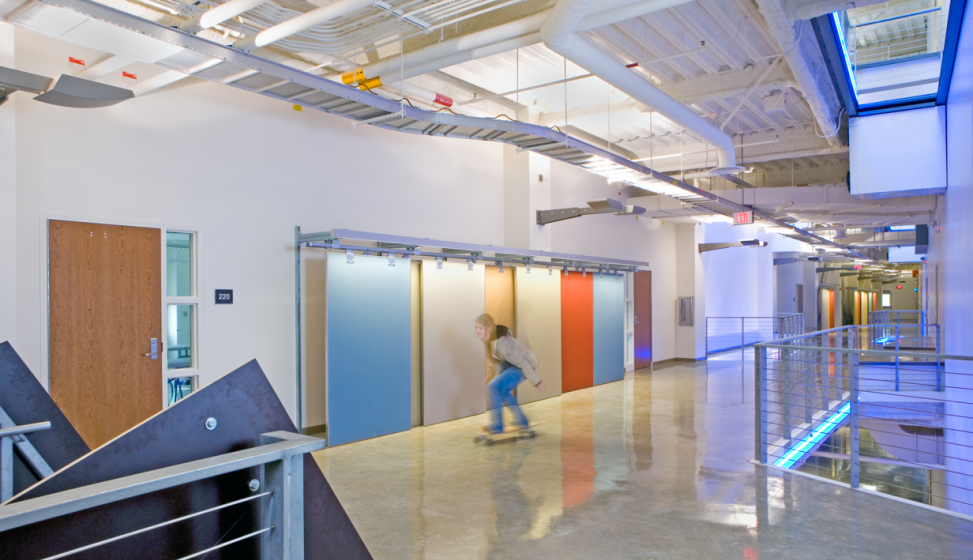
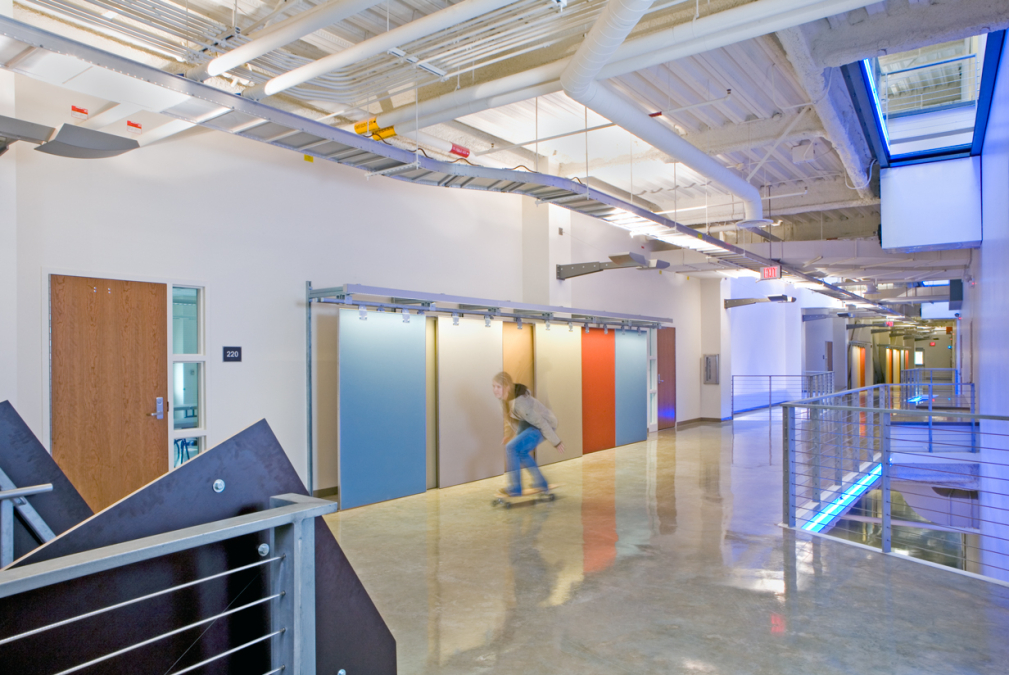
The interior spaces are equipped with technology capable of adapting to a yet undetermined future demand. The finishes include stained concrete floors, wood paneling at the elevator cores in the entry lobby, sliding bulletin boards with a variety of colorful cork, custom light sconces and exposed ceilings. The result is a colorful, welcoming and somewhat unconventional space; one that encourages thinking and working across disciplines.

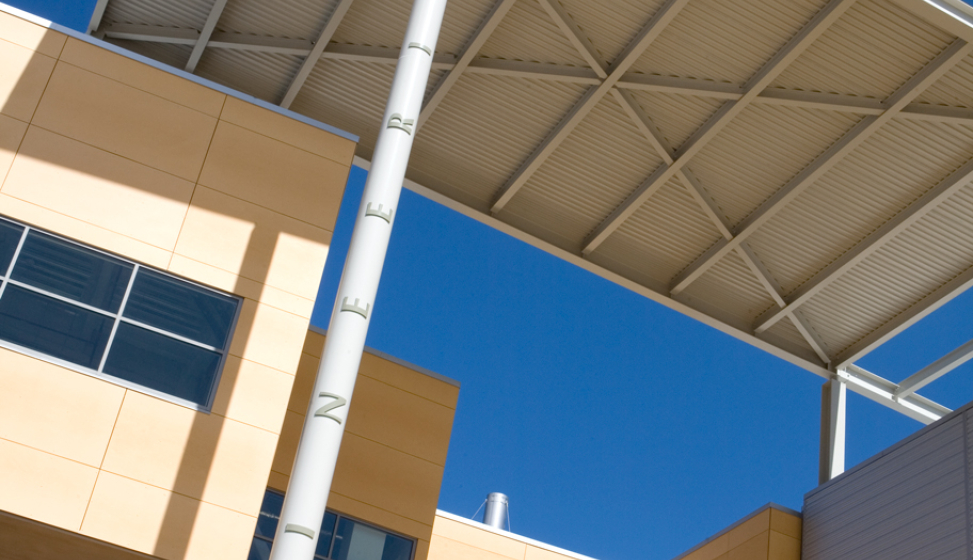
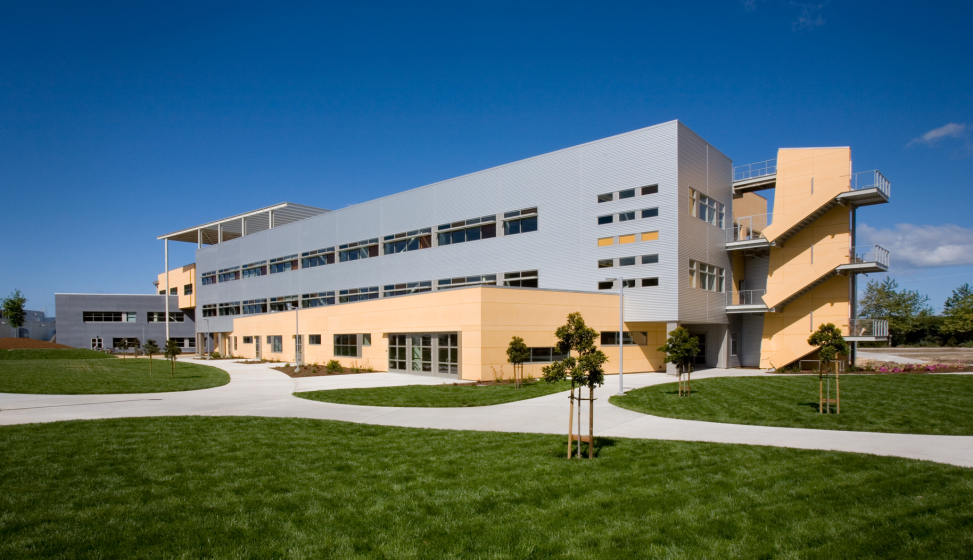
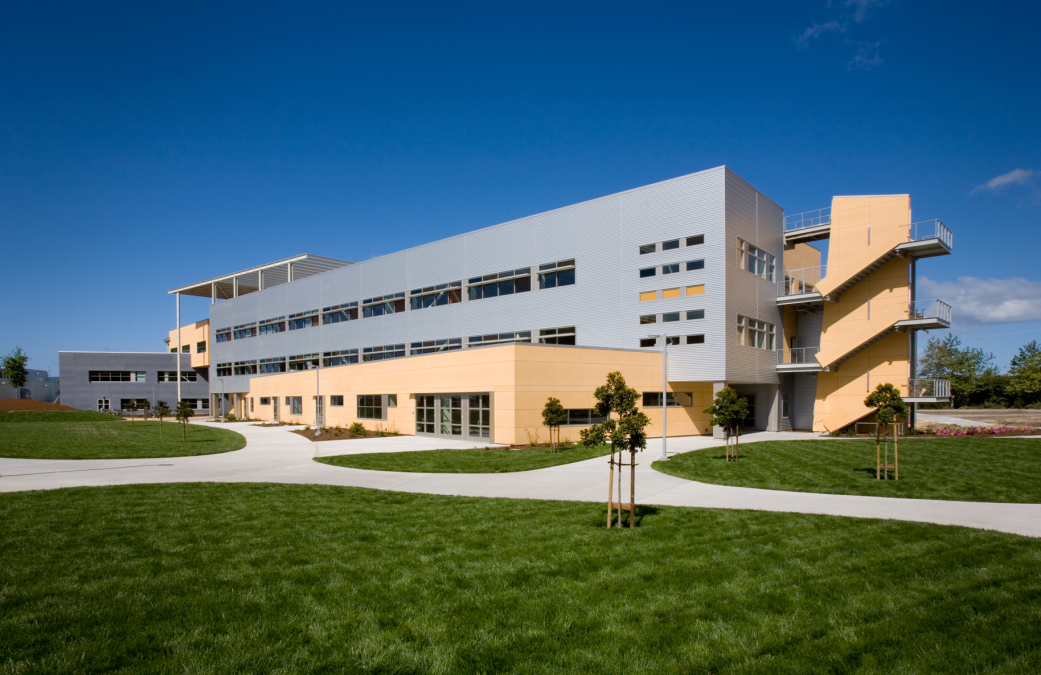
The massing of Engineering IV is a response to site constraints, opportunities—including optimal solar orientation and views—and programmatic needs. The site is located at the terminus of a significant pedestrian axis connecting Engineering 13, the new ATL building and the proposed Bonderson building. The entry to Engineering IV was located to respond to this axis and draw people to the building. The building is formed to complete a landscaped plaza bordered by the ATL and Bonderson engineering buildings. The plaza is envisioned as the heart and soul of the interdisciplinary engineering precinct, a dynamic space where students can move their projects outdoors for testing and display, creating a synergistic relationship with the neighboring engineering buildings.  

The building is designed as two intersecting volumes, each informed by a different site condition. The westernmost volume contains program spaces that require high bay space. The eastern volume is angled away from the first to create a welcoming entry court and to acknowledge the curving of Highland Avenue, which borders the site to the north. A series of large glass double doors on the first floor will encourage engineering activities to spill into the courtyard and plaza.
 

Awards Info

Awards

Close
  • 2009 Honor Award – Institutional Projects
    • AIA Central California Coast Chapter
  • 2007 Design Merit Award – Institutional/Educational
    • AIA Pasadena/Foothill Chapter
  • 2006 Design Excellence, Citation Award
    • AIA San Fernando Valley Chapter

Ronald Tutor Hall, USC

  • DESCRIPTION
  • PROCESS
  • GALLERY
RELATED PROJECTS
Next Previous
 

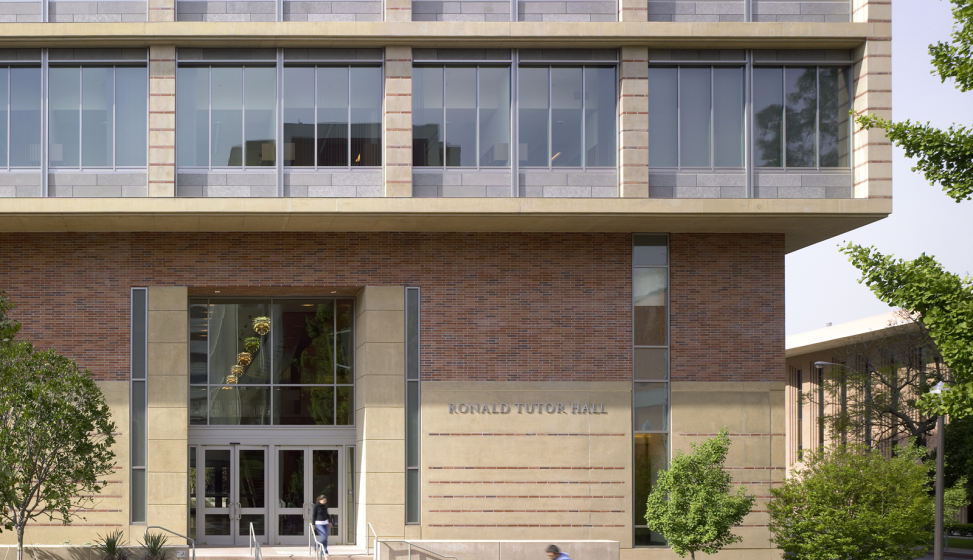
Ronald Tutor Hall

University of Southern California

Los Angeles, California

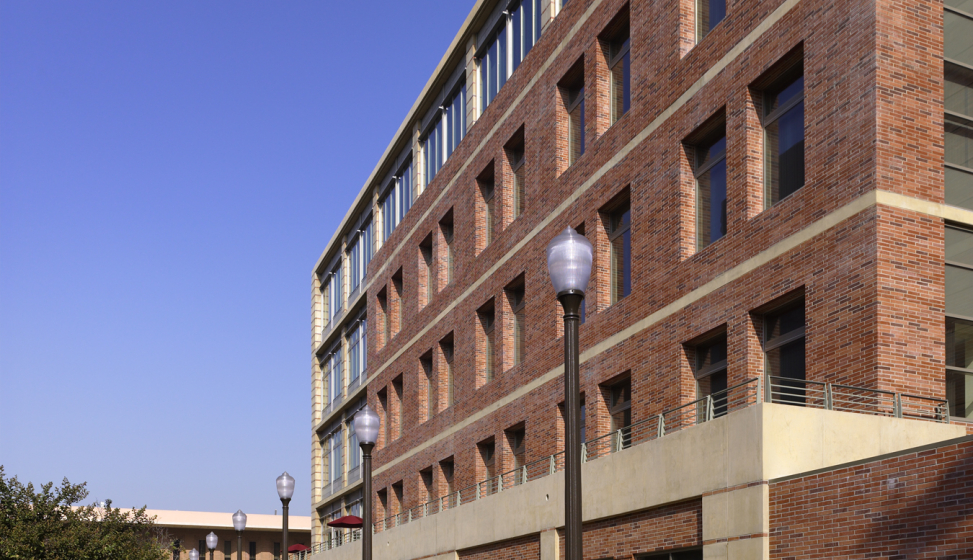
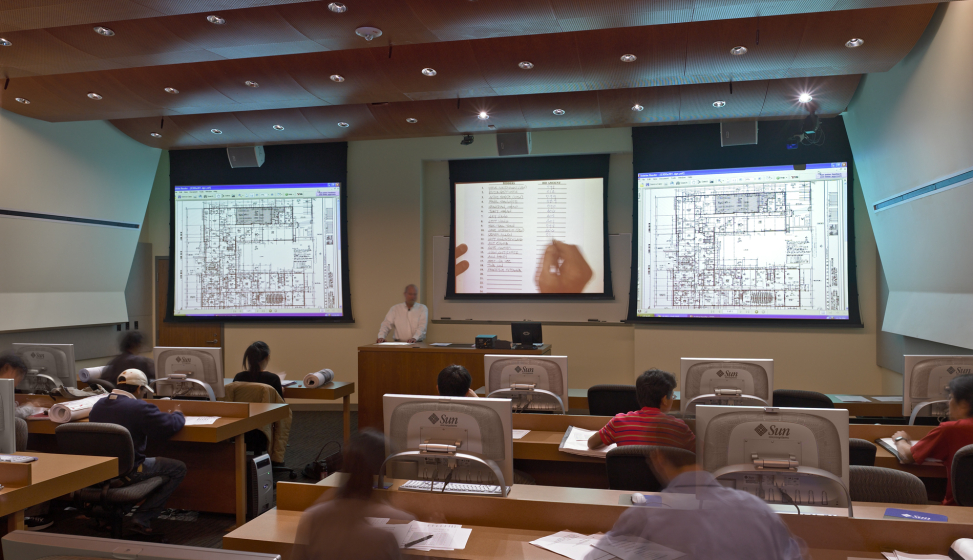
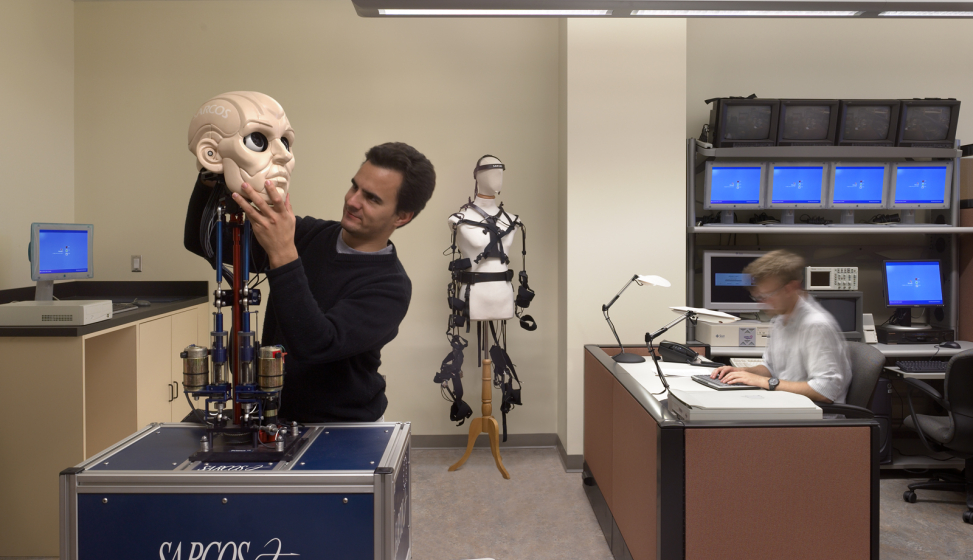
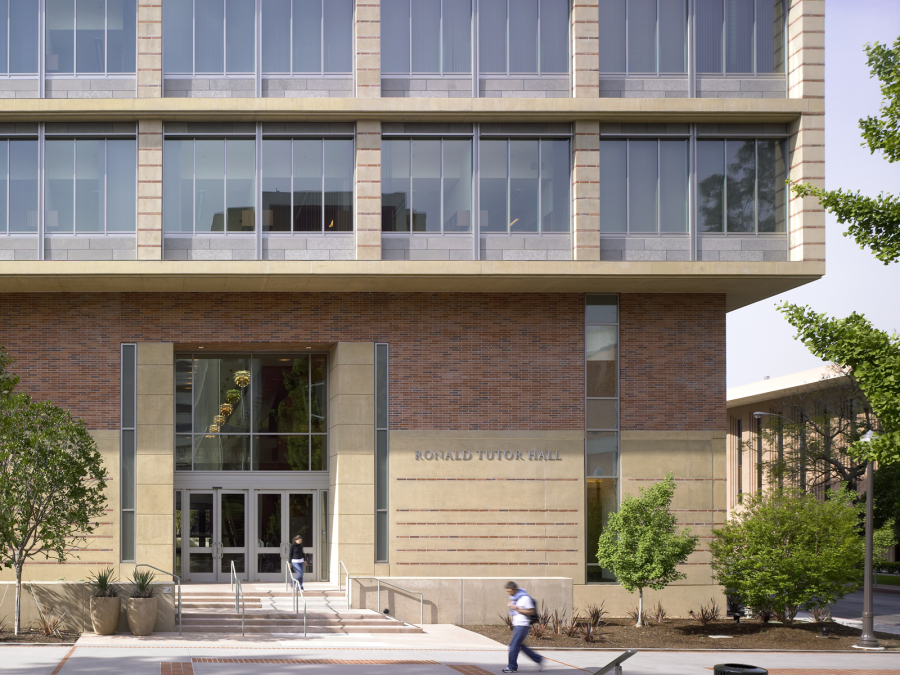
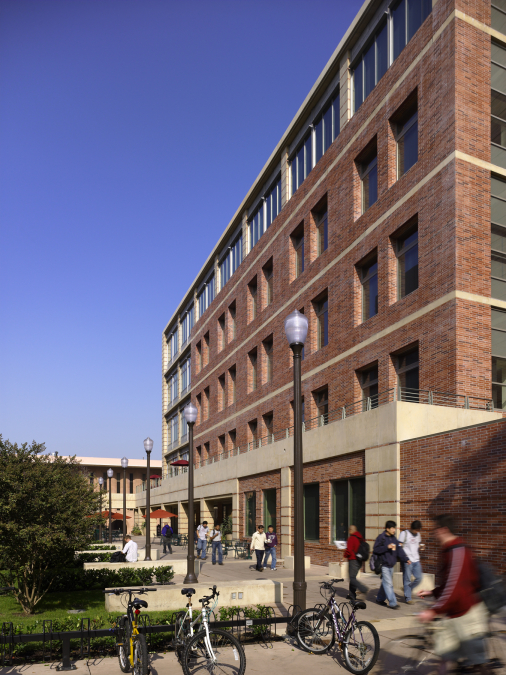
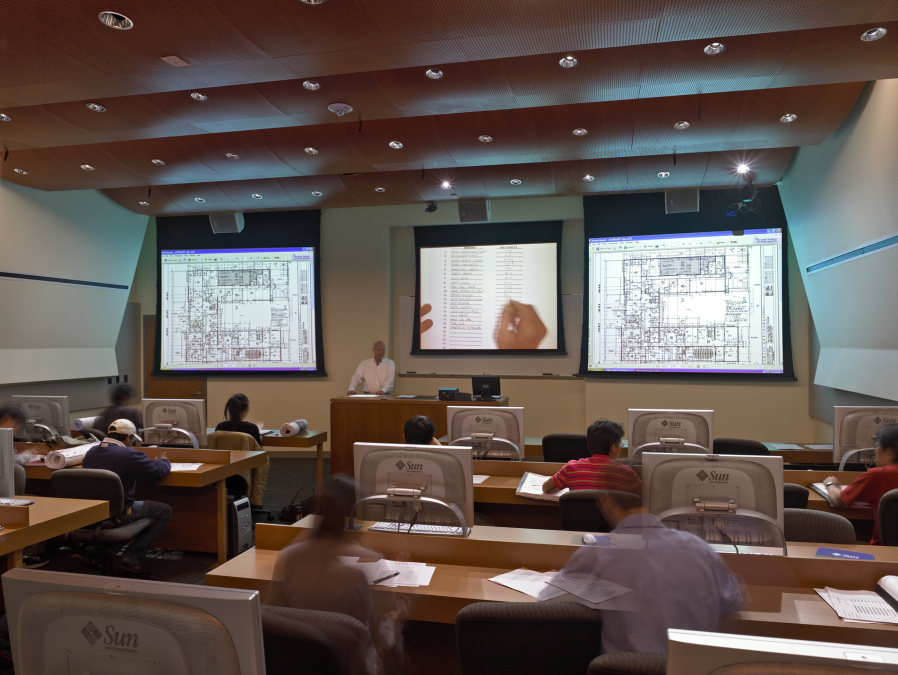
University of Southern California's Ronald Tutor Hall is a five-story, 103,000 GSF engineering facility that accommodates undergraduate and graduate studies in information technology, bioengineering, and nanotechnology. The flexible space features labs and research areas extending from a central-core plan as well as the Viterbi Museum.

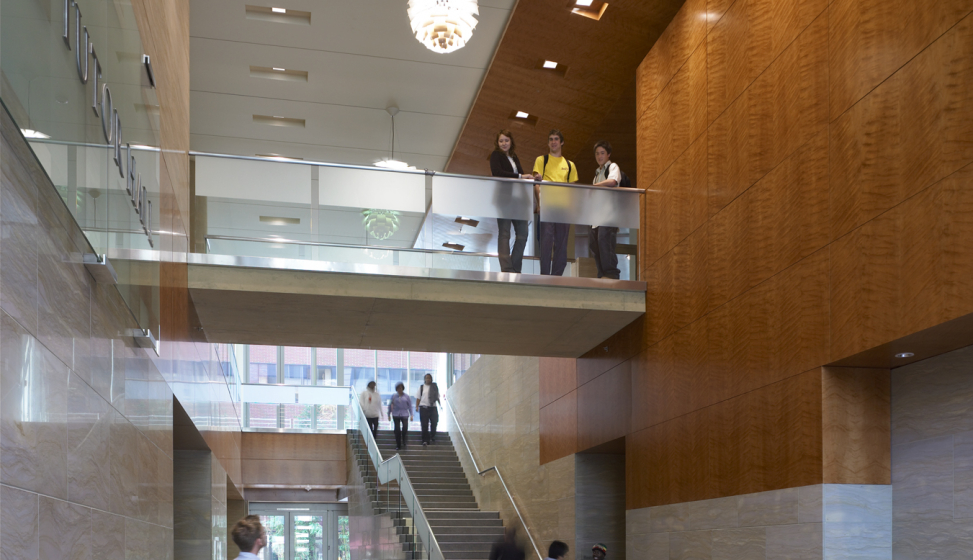
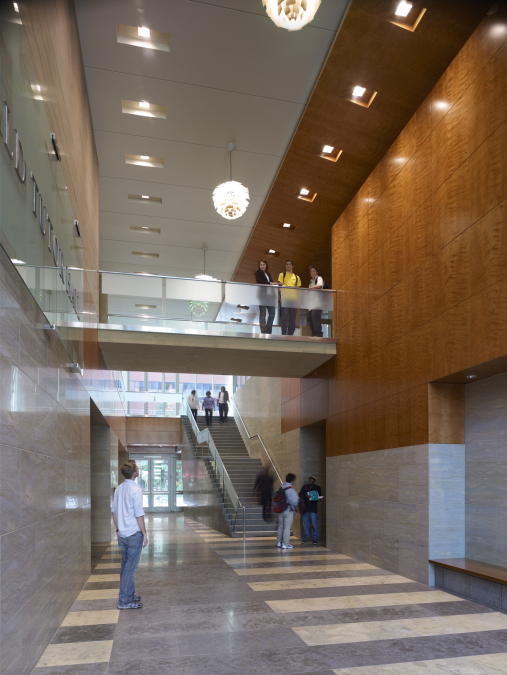
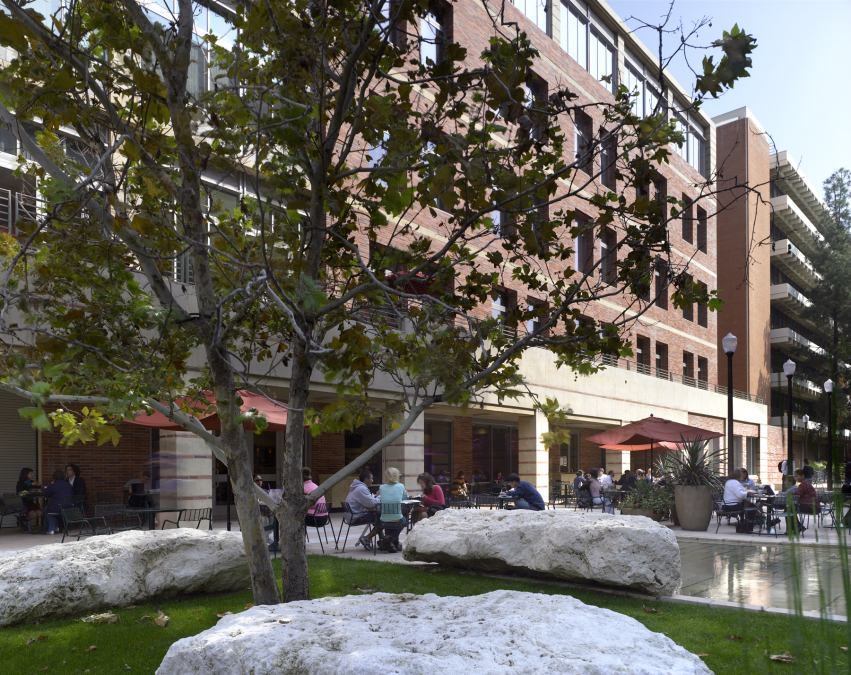
The modular lab spaces are modeled after those at national government laboratories to give students and professors the most current configurations and equipment. Elements particular to the university environment include elevated safety levels and collaborative work areas. The building defines a new campus yard and identity for the campus with a grand entry lobby opening onto the main landscaped courtyard envisioned as an outdoor academic court to encourage and foster collaboration.

Awards

Close

La Kretz Hall, CSU Los Angeles

  • DESCRIPTION
  • PROCESS
  • GALLERY
RELATED PROJECTS
Next Previous
 

La Kretz Hall

California State University, Los Angeles

Los Angeles, California

The 106,000-SF laboratory facility, located across from the existing Biological Sciences building, forms a consolidated science zone within the campus. This helps to unify the previously dispersed science programs and create a collegial environment among its users, which include chemistry, biology, allied health, and geology departments.

The three-story project is primarily devoted to wet-lab uses, with fume hood intensive space and instructional spaces. The facility includes a Van de Graaff linear accelerator, veterinary science facilities, greenhouses, and an observatory.

Awards

Close

Biotech Office Renovation

  • DESCRIPTION
  • PROCESS
  • GALLERY
RELATED PROJECTS
Next Previous
 

Biotech Company Office Renovation
(Confidential)

Thousand Oaks, California

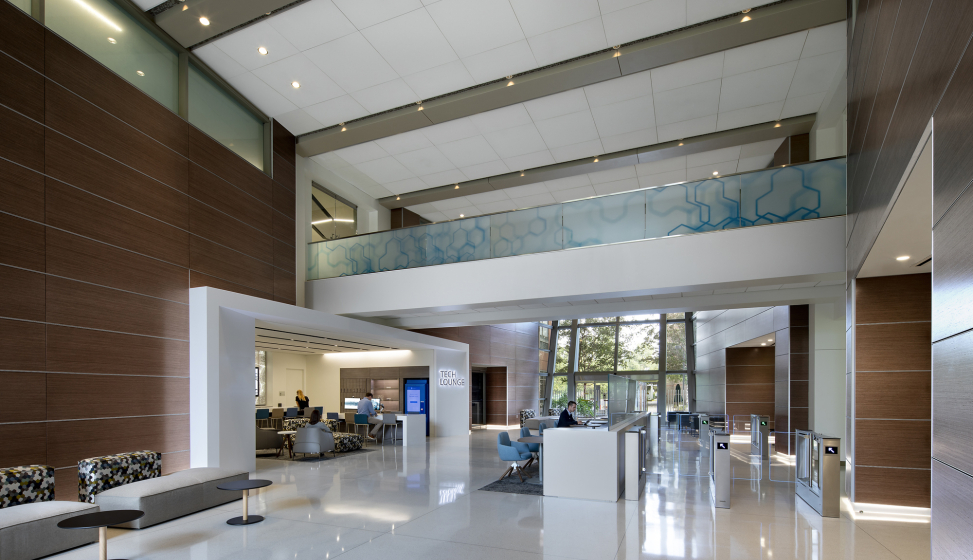
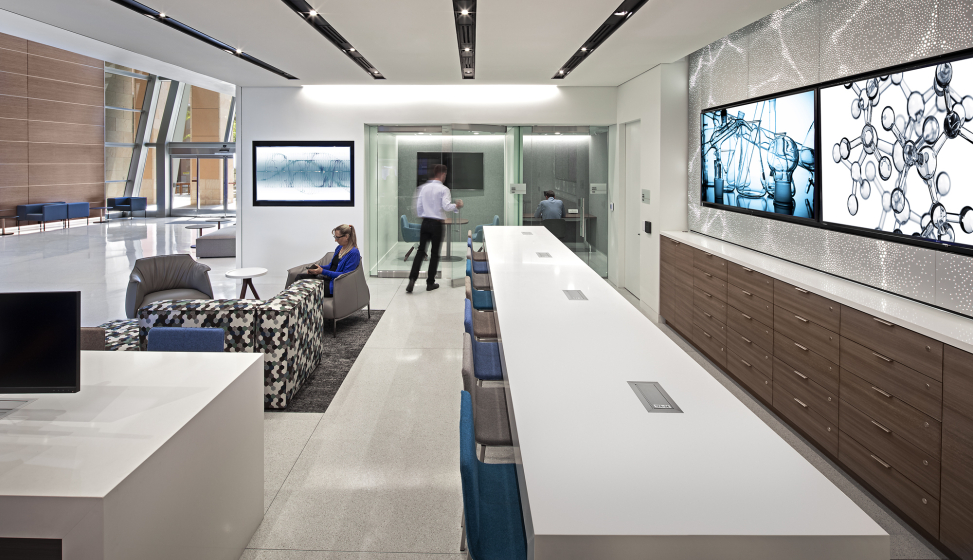
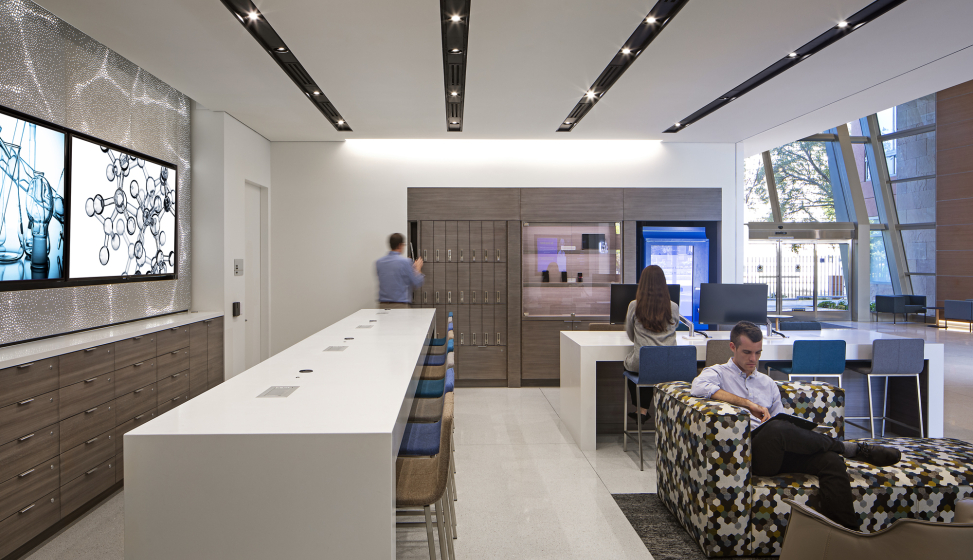
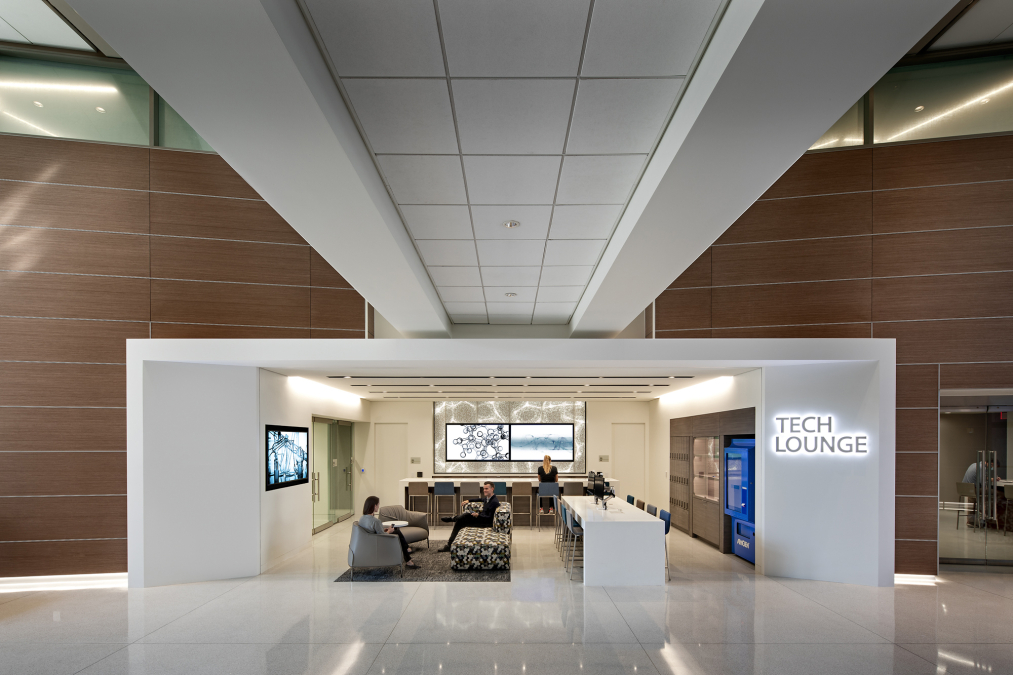
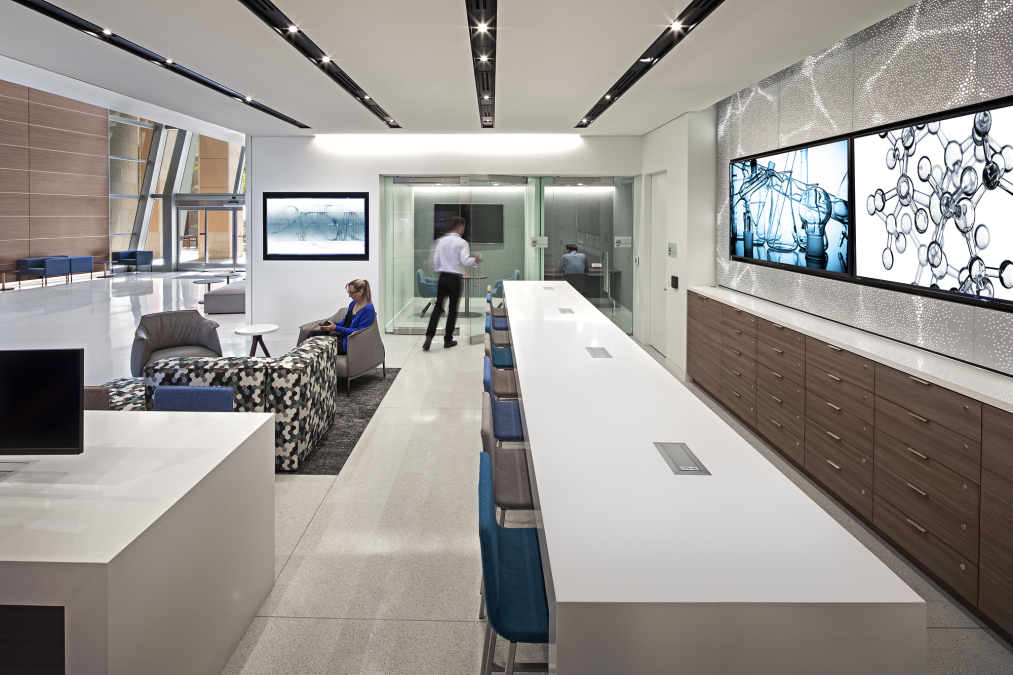
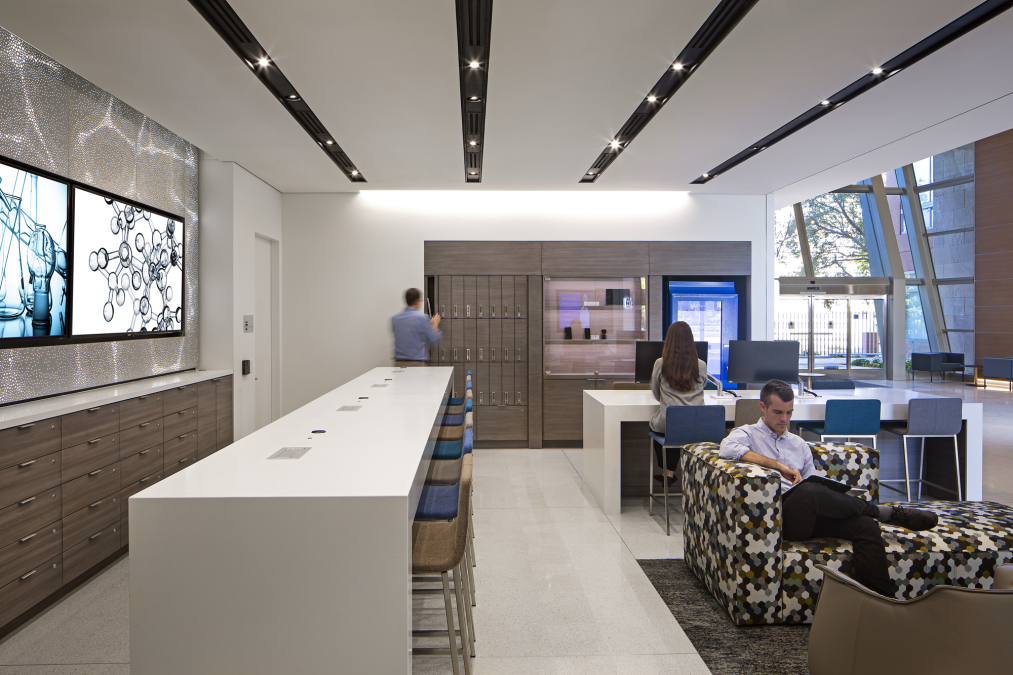
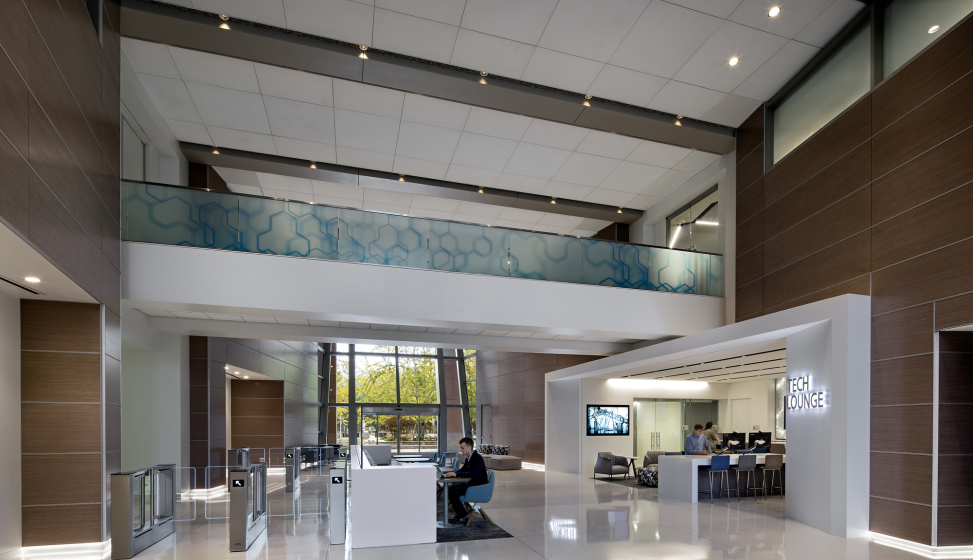
This 4,000-SF lobby and Tech Lounge renovation for a private biotech company provided a centrally located technology service center for employees and modernization of an existing lobby space in an executive office building. The project scope included:

- Tech Lounge with tech bar, lounge seating, work table, display case, lockers, storage, and tech vending machine
- Tech work room with back-of-house work stations and storage
- Tech demonstration room for new technology tutorials
- Private meeting room
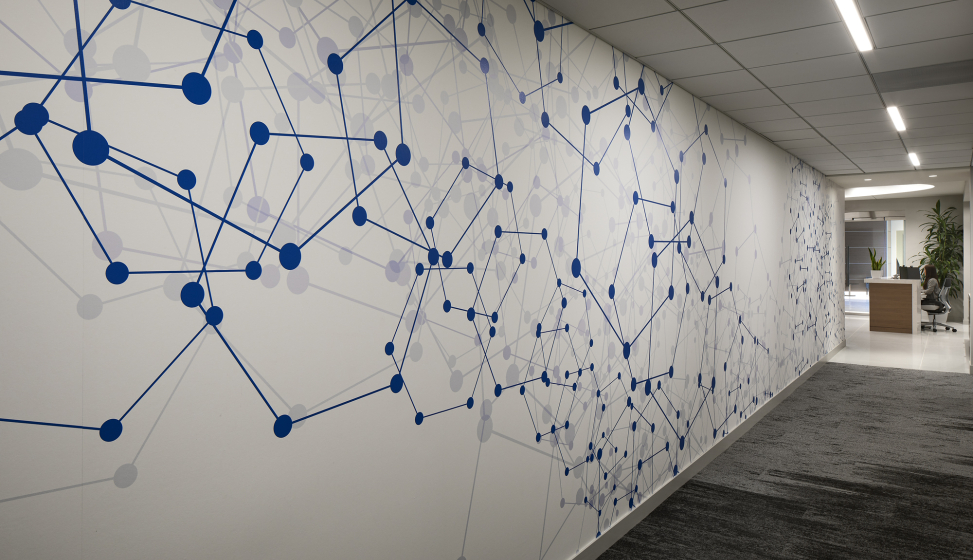
- Elevator waiting area and cab upgrades, including new finishes and graphics
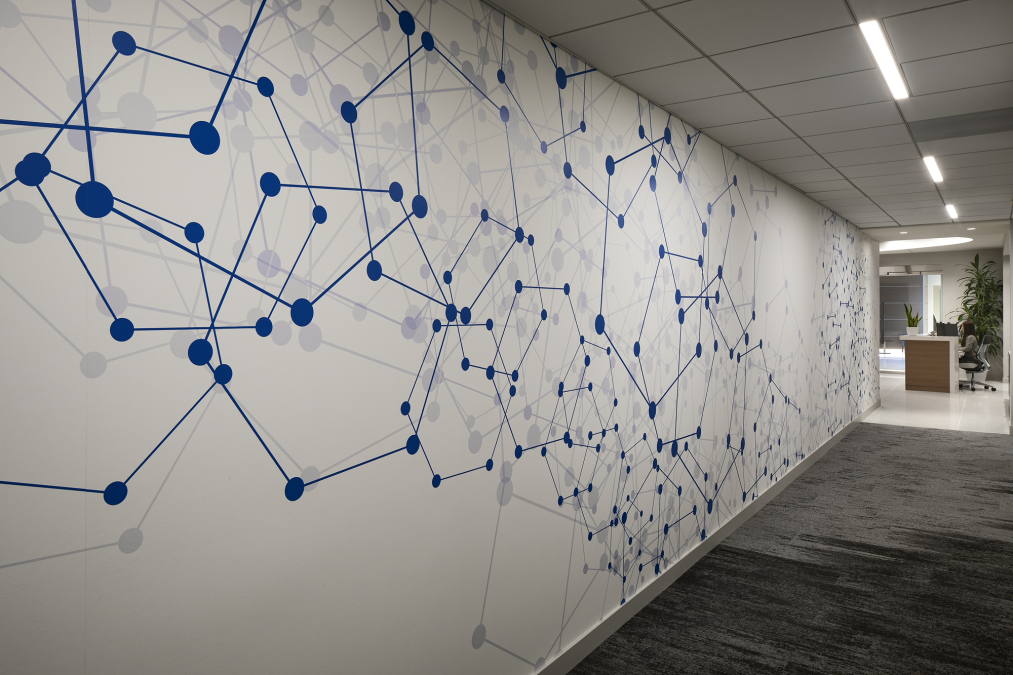
- Lobby upgrades, including new finishes, seating areas and graphics
- Toilet room upgrades

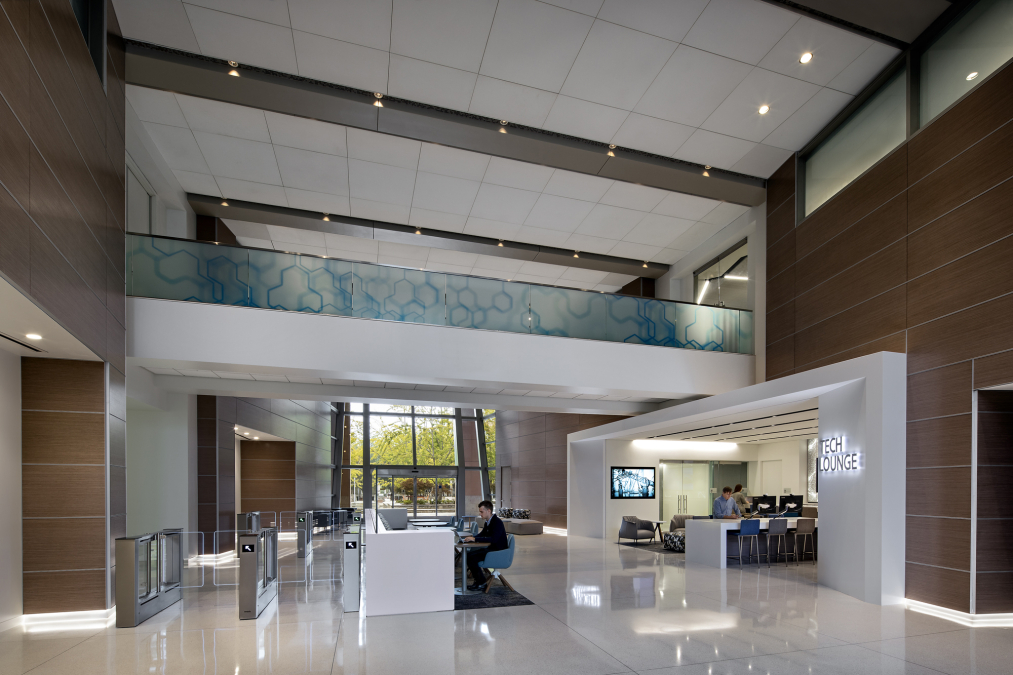
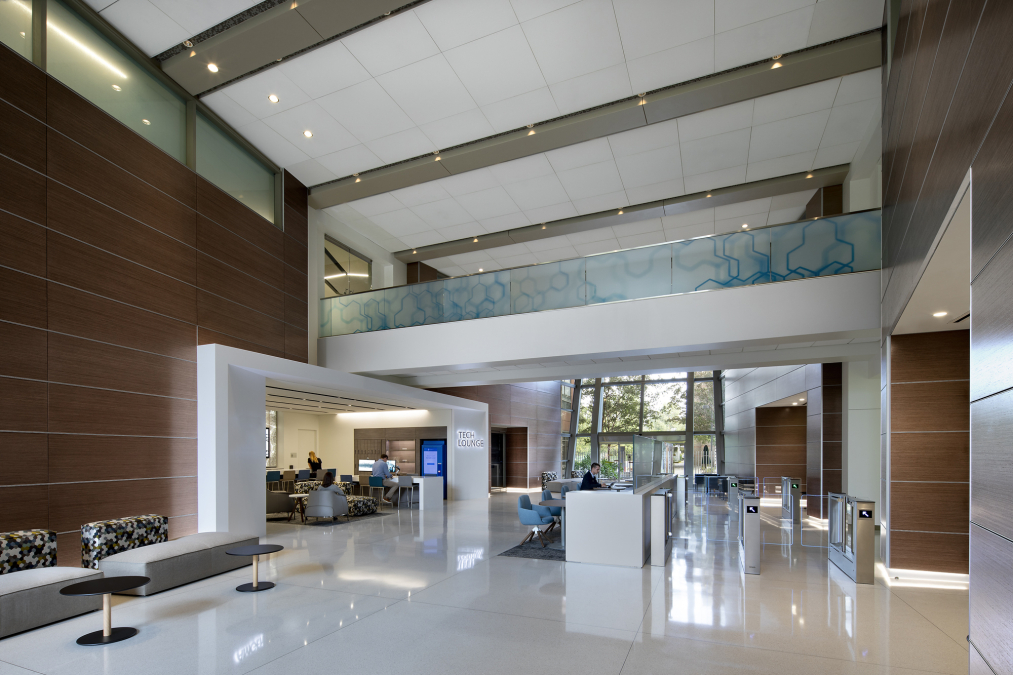
The Tech Lounge was designed to be a welcoming space by opening it up to the existing two-story lobby space. The white solid-surface entry portal that extends into the lobby contrasts with the surrounding darker wood wall paneling, making it easily identifiable to new employees. The new terrazzo flooring that runs throughout the lobby also extends into the Tech Lounge, creating a stronger connection between the two spaces. As a result, the lobby serves a dual function as both building circulation and Tech Lounge waiting area.

Awards

Close

Guttman Laboratory, Caltech

  • DESCRIPTION
  • PROCESS
  • GALLERY
RELATED PROJECTS
Next Previous
 

Guttman Laboratory

Caltech

Pasadena, California

Professor Guttman works in the Division of Biology and Biological Engineering at California Institute of Technology. His work focuses on a new class of genes known as lincRNA. These genes are involved in controlling how stem cells become other types of cells. Guttman’s work  includes both the experimental as well as the computational components of biological research. In 2012 he received the NIH Director’s Early Independence Award, and has been named as one of Forbes magazine’s ’30 under 30’.
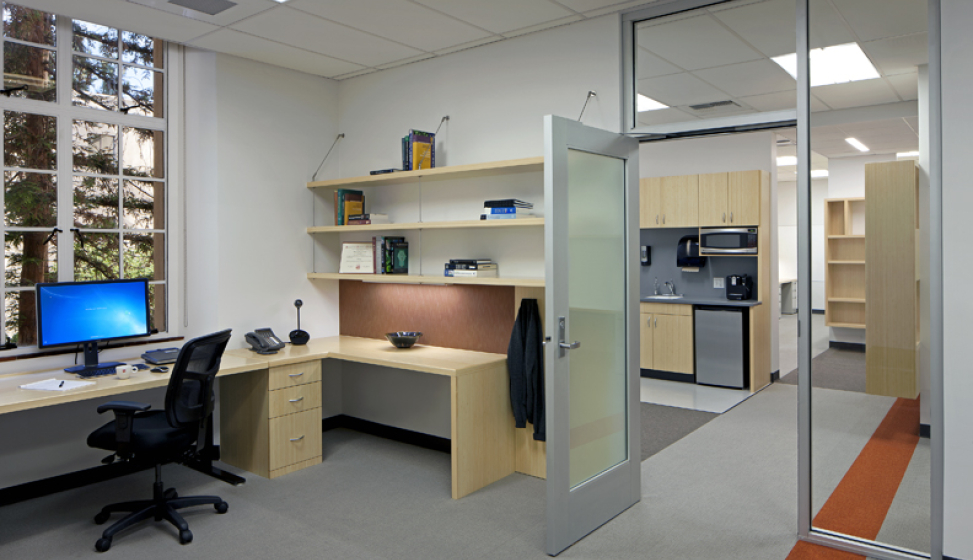
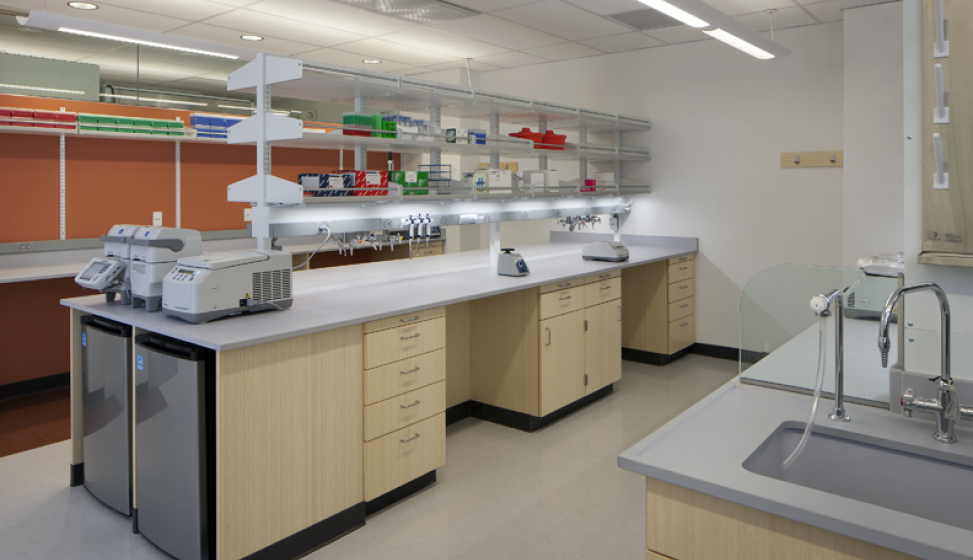
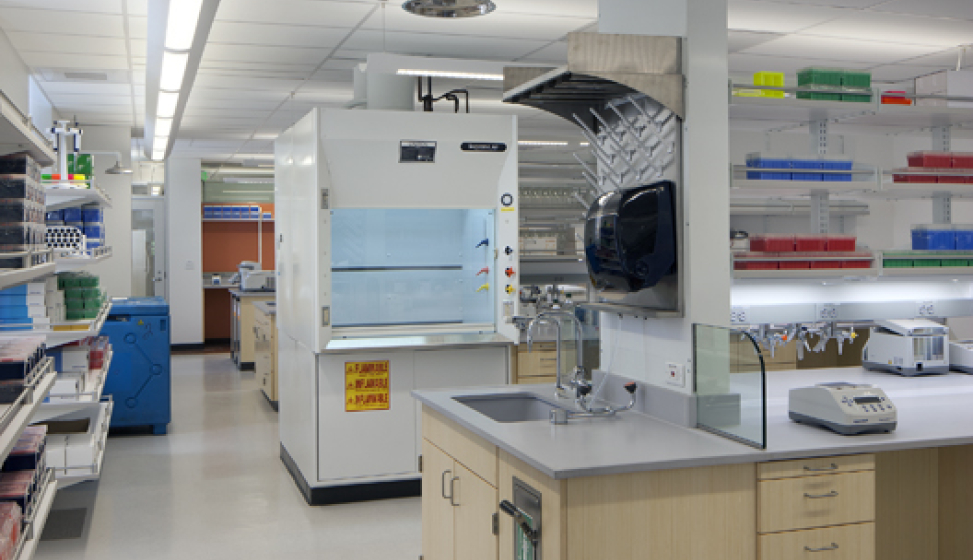
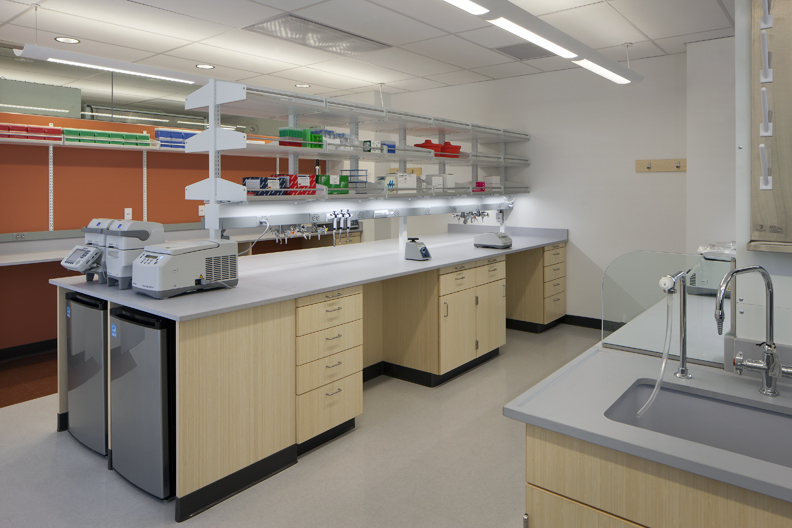
Professor Guttman’s method of research required the design of both a biological lab and a computational area that were efficient, conducive to the work being performed, and that fit within a building originally constructed in the 1930’s. The Guttman lab is located on the second floor of Kerckhoff Hall, and is comprised of 1,732 SF of wet lab area, a 1,077 SF computational office area, and a cold room. The wet lab includes a tissue culture room containing microscopes and bio safety cabinets, as well as a main lab space with 18 workstations and 2 fume hoods. 

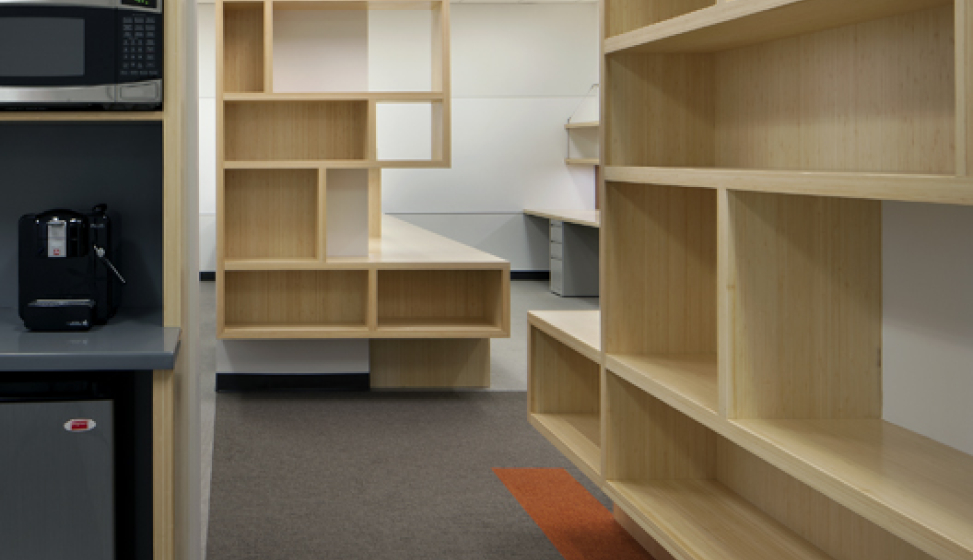
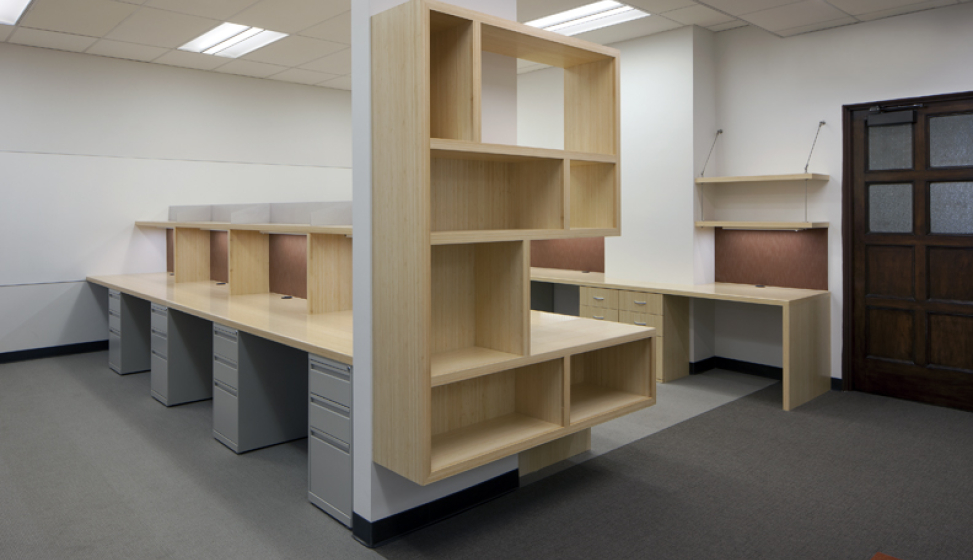
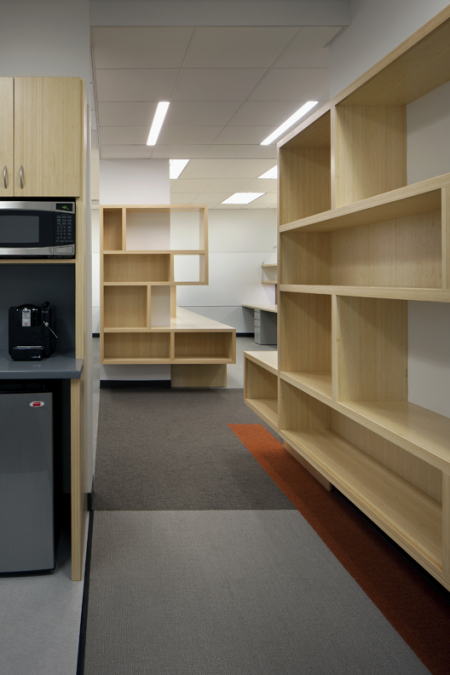
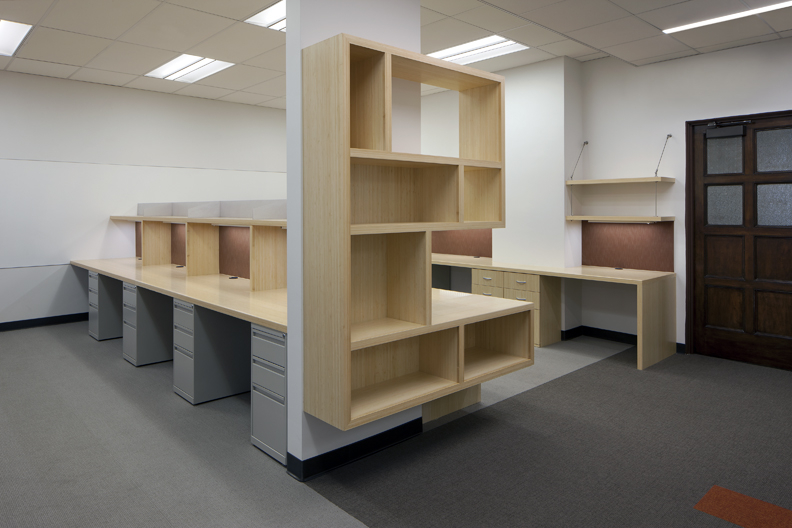
Design features include a cohesive architecture that connects the two main components, which are set across the hall from one another, custom bamboo cabinetry and shelving, direct/indirect lighting coupled with under-cabinet lighting to achieve the appropriate light levels in the lab spaces. 3D modeling and rendering was used to help professor Guttman visualize the spaces during design. The scope of work included a new mechanical system including 4 fan coils located in the ceiling to condition the space. Construction of the spaces required timely coordination between AC Martin, the consultants and the general contractor, as the project was completed in approximately 4.5 months.

Awards

Close

Minnich Laboratory, Caltech

  • DESCRIPTION
  • PROCESS
  • GALLERY
RELATED PROJECTS
Next Previous
 

Minnich Laboratory

Caltech

Pasadena, California

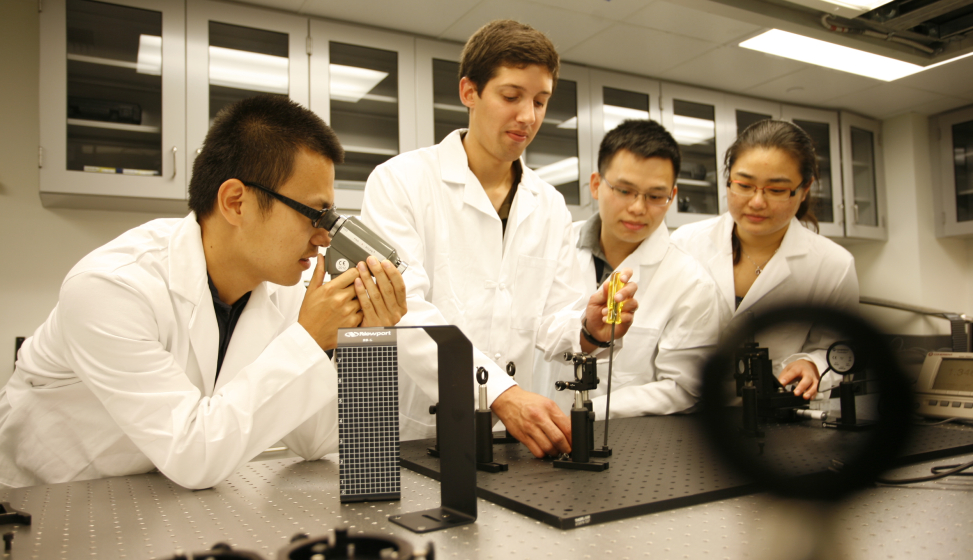
The nature of scientific collaboration is evolving from one of conducting research within departments to one that creates partnerships across departments/disciplines/institutions and, increasingly, context (academic, government, private industry). This type of interdisciplinary/multi-contextual collaboration has increased the pace of research and encouraged the development of innovative and groundbreaking strategies in investigating increasingly complex problems. Buildings from the 40’s - 90’s do not typically support this type of collaboration. For years, the emphasis in research labs was on bench, support and private office space providing no conference, meeting or social space required for an interdisciplinary team. The Minnich Lab renovation at Caltech looked at the department’s specific needs for collaboration and re-imagined the spaces to open them up and facilitate collaboration between groups.

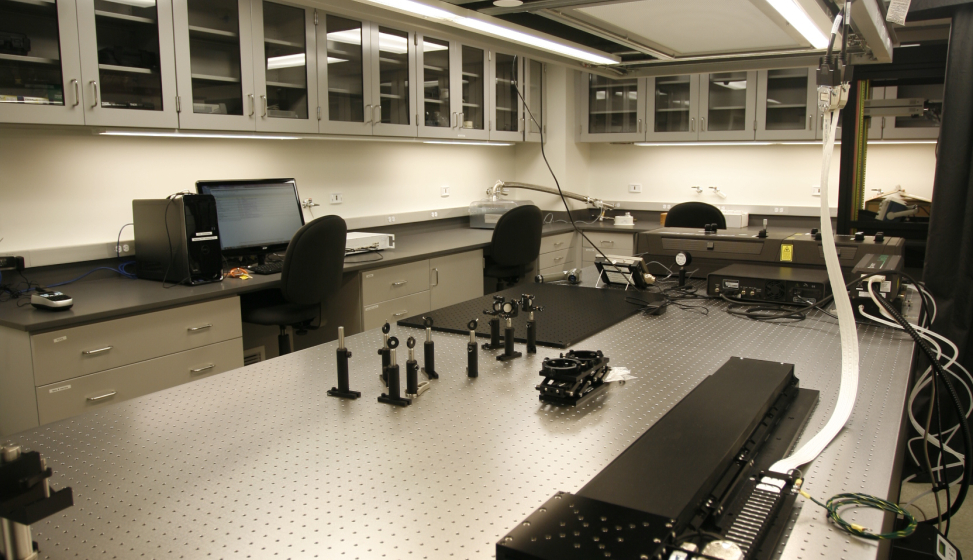
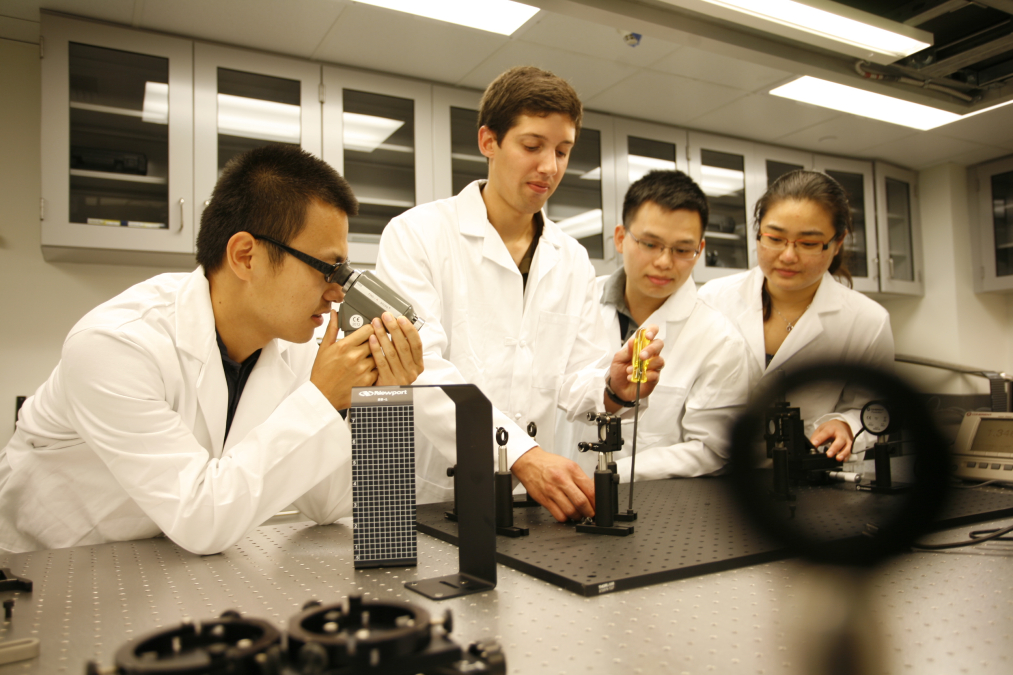
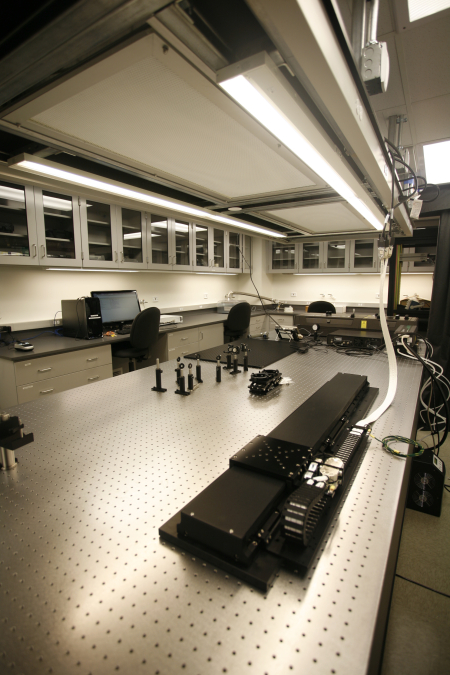
The Minnich Nanotechnology Research Laser Lab was inserted into the existing 50 year old Keck Laboratory Building at the basement level. Professor Minnich not only conducts experiments, but because of the nature of his work, must also build the elements used in his experiments.  This required spaces to conduct experiments as well as spaces for tooling and manufacturing. AC Martin worked closely with the project team to integrate the proposed design into the existing structure and systems, including upgrades to systems as were required. New spaces include: optical lab, dry lab, wet lab with fume hood, and a sample prep area.
Awards

Close

Portico

  • DESCRIPTION
  • PROCESS
  • GALLERY
RELATED PROJECTS
Next Previous
 

Portico

Oakland, California

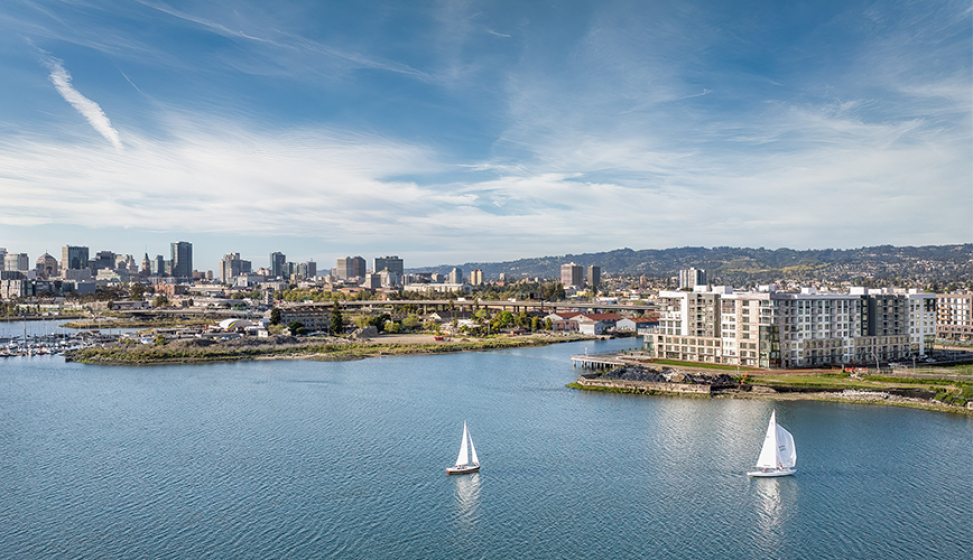
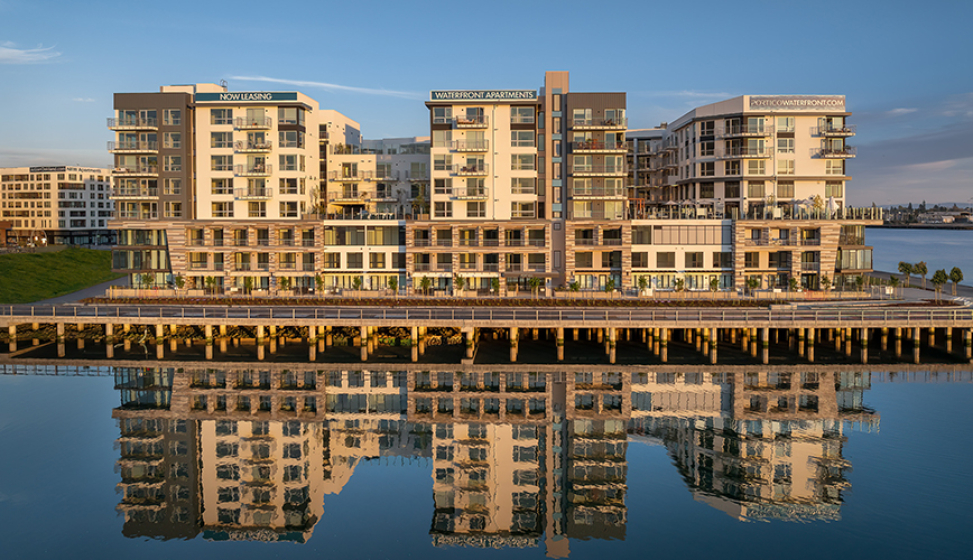
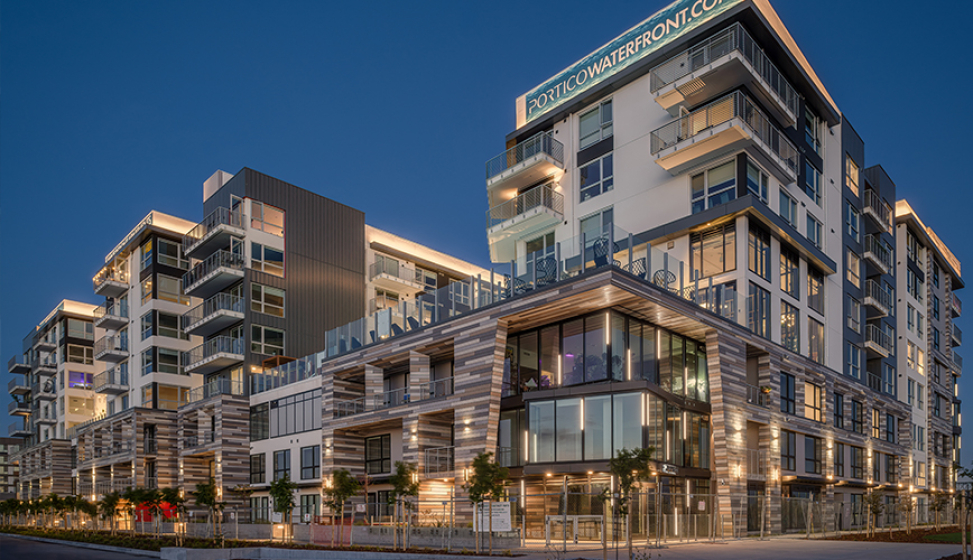
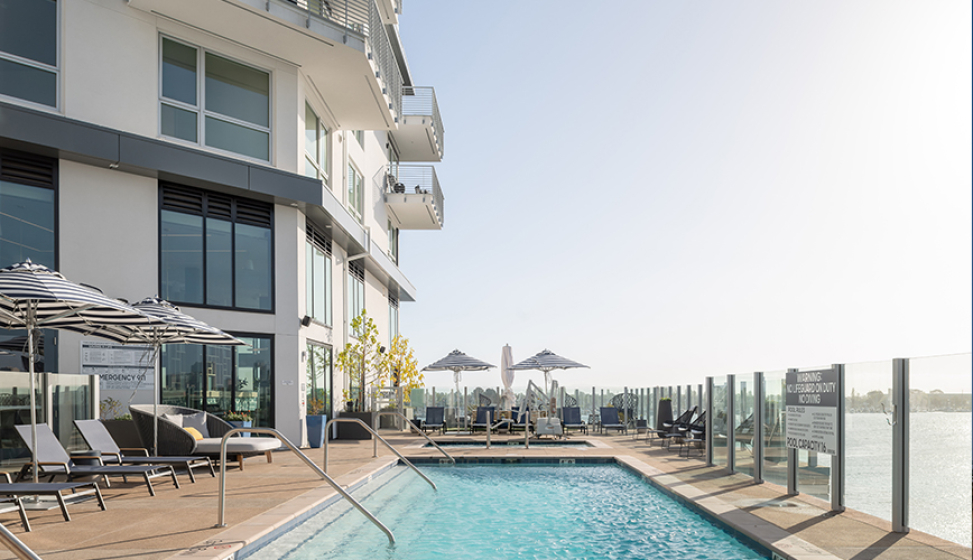
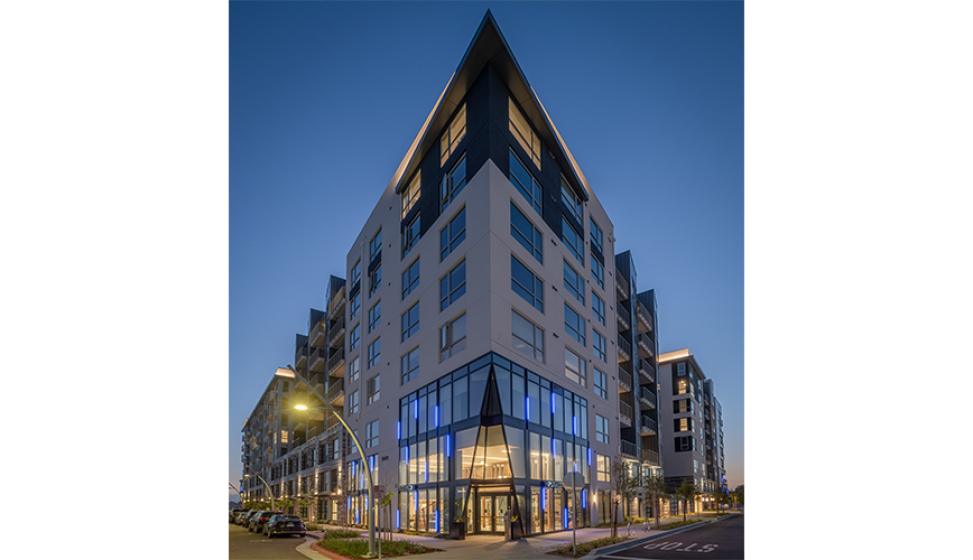
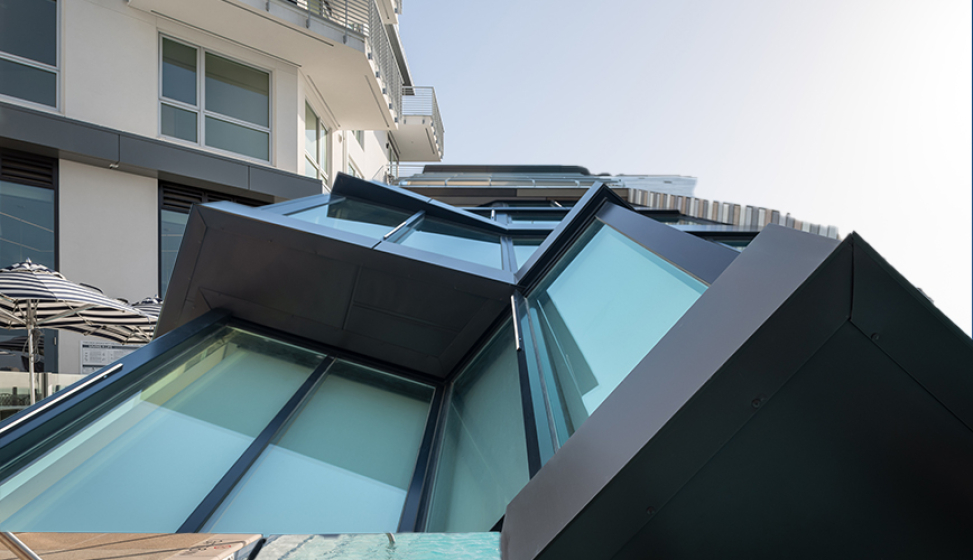
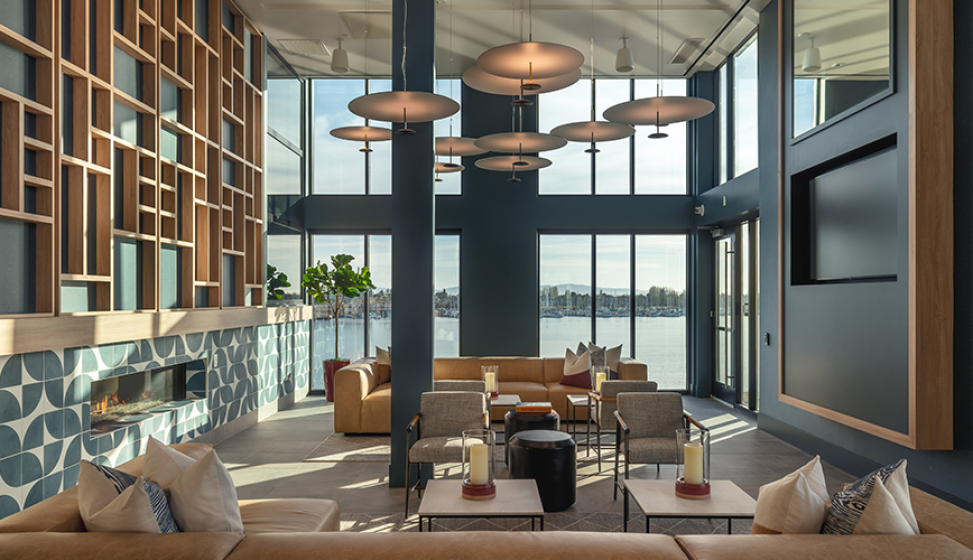
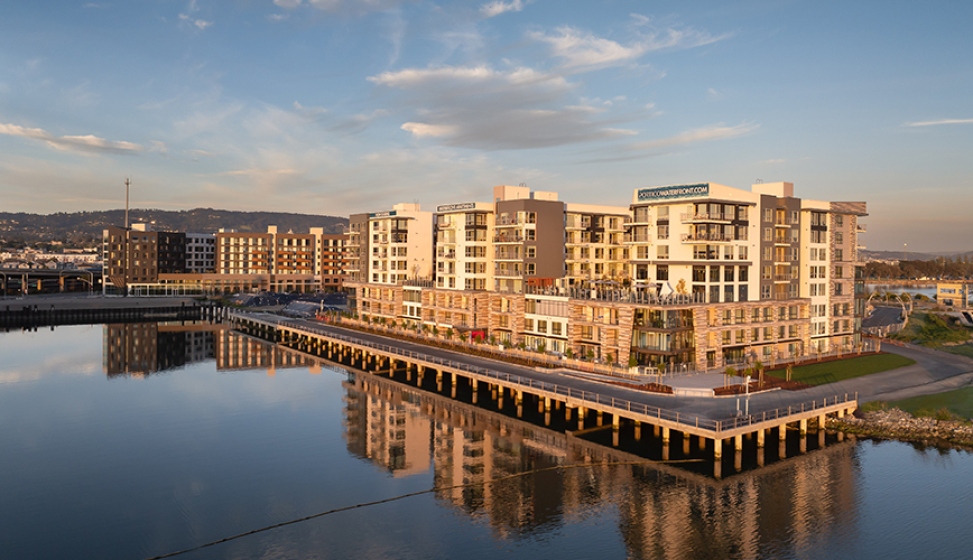
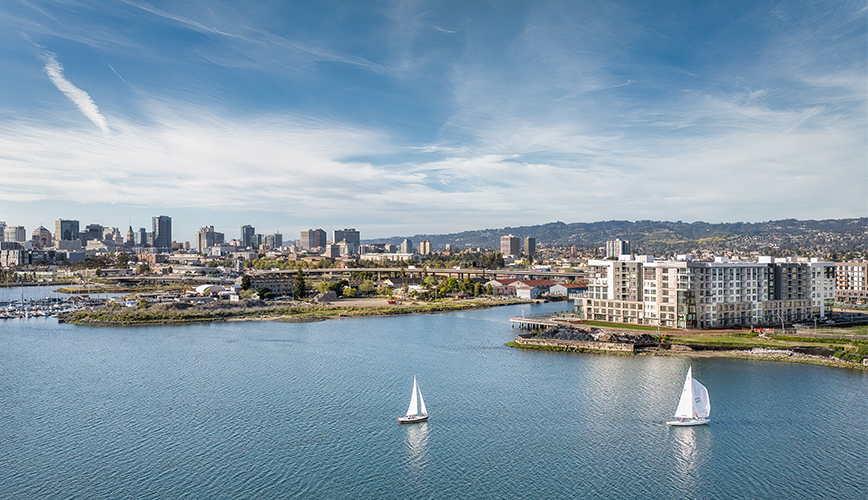
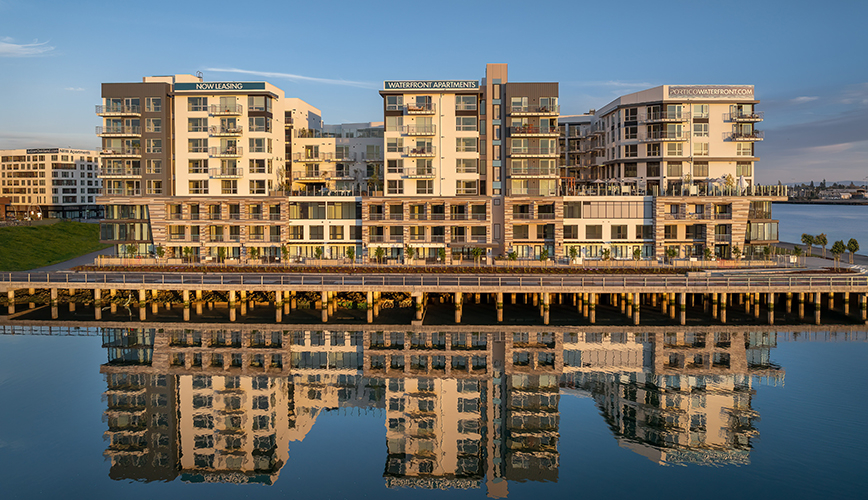
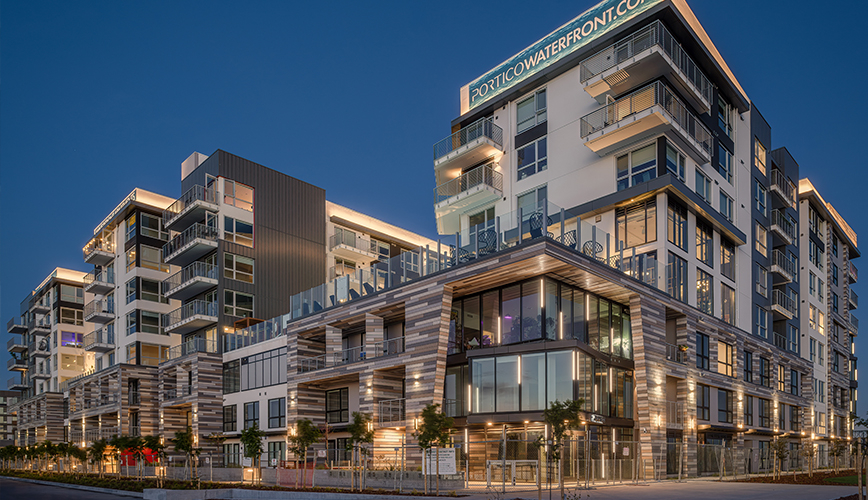
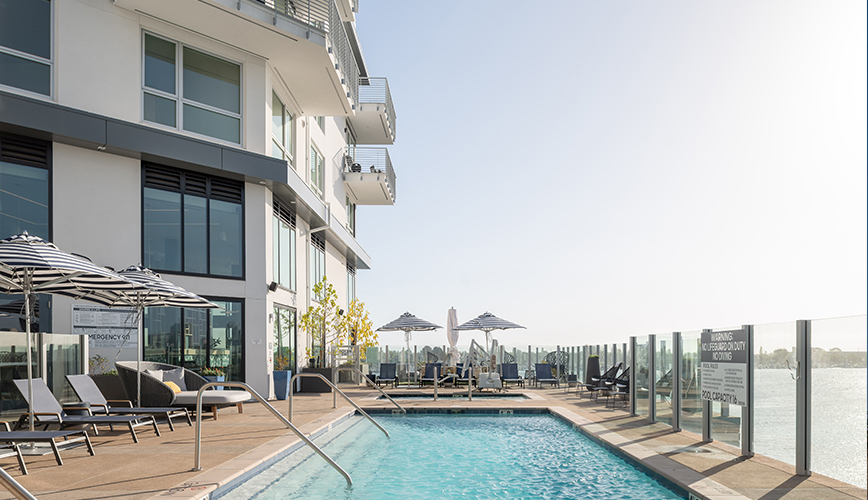
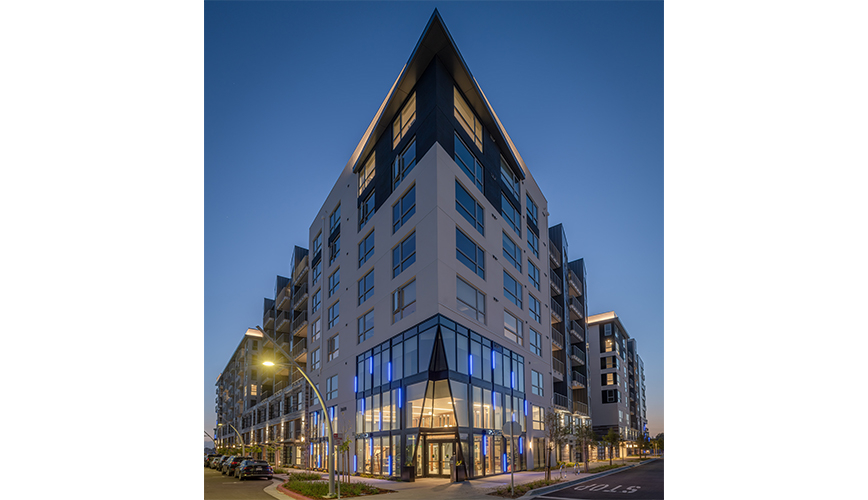
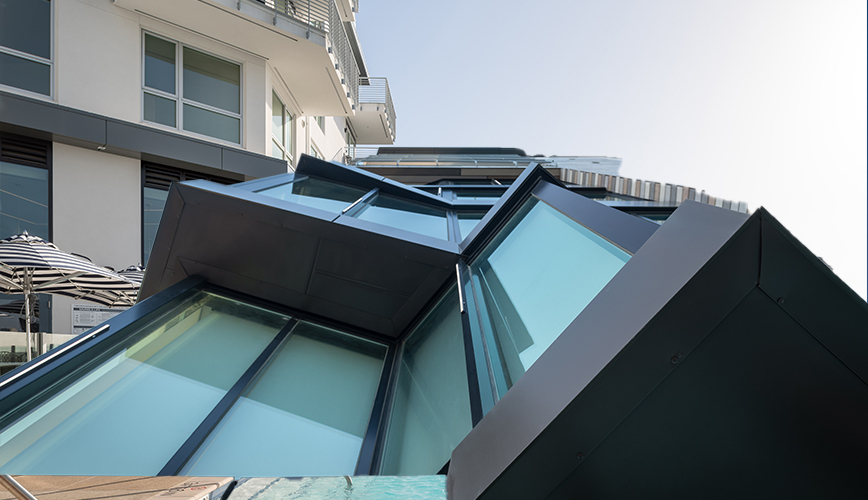
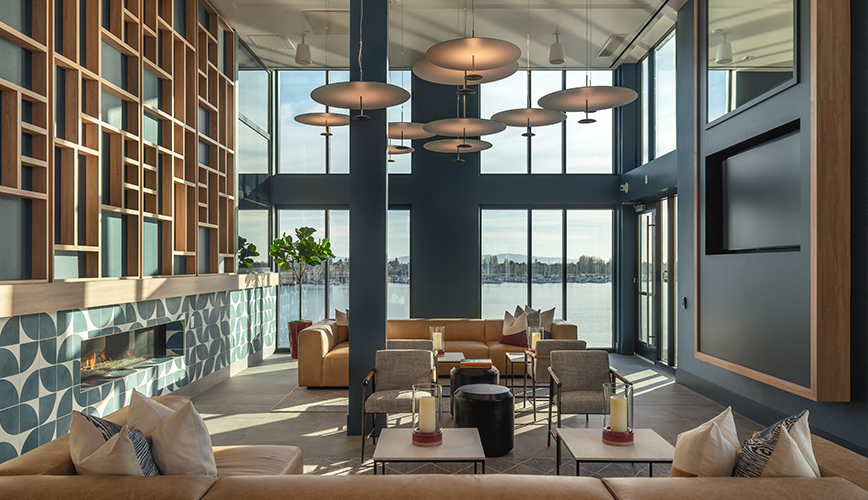
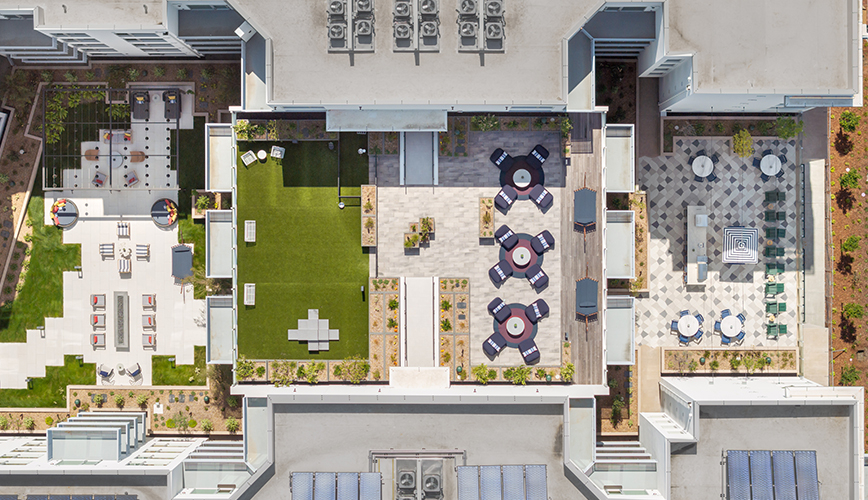
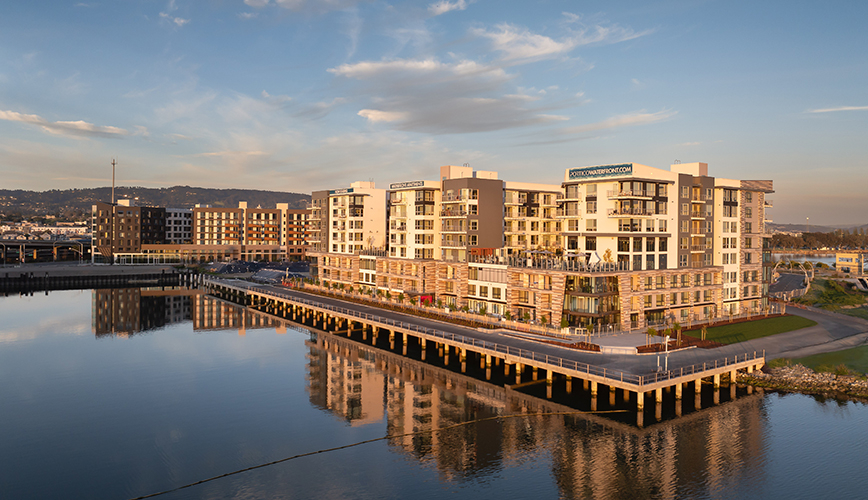
Designed for maximum views to the waterfront, Portico takes cues from the historic 9th Ave Terminal Building located within the specific plan and responds by adapting the proportions of the windows and monumentality of the base to this dynamic mixed use project. Additionally, given Oakland’s storied legacy as a waterfront city and powerhouse shipping port, the project also drew inspiration from the old lighthouse that was once located at the mouth of the harbor. The lens from the lighthouse had a distinct serrated profile as a way to amplify light. The project takes a contemporary interpretation of the lighthouse lens to provide distinct expression at key locations to create a beacon-like corner that faces the public park and adjacent promenade.
Awards

Close

Las Dahlias

  • DESCRIPTION
  • PROCESS
  • GALLERY
RELATED PROJECTS
Next Previous
 

Las Dahlias

Los Angeles, California

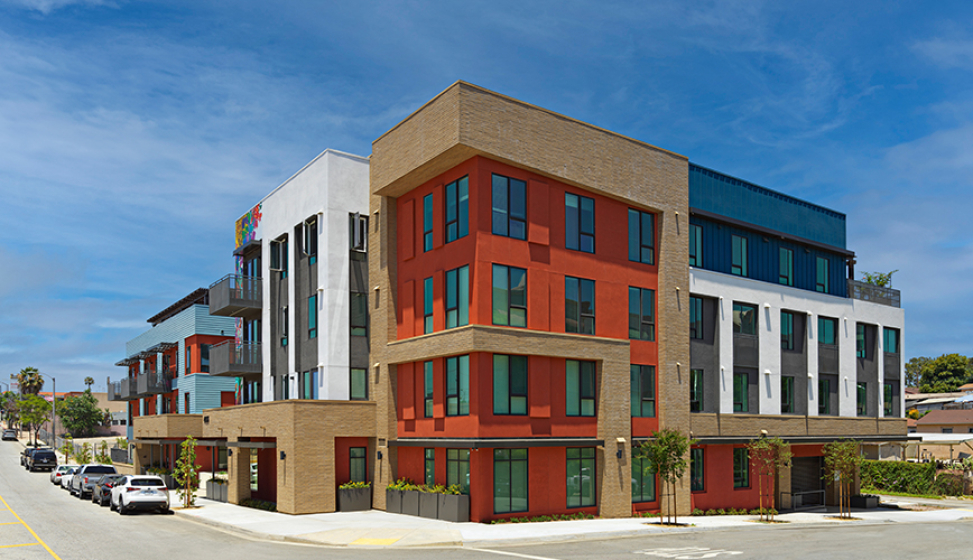
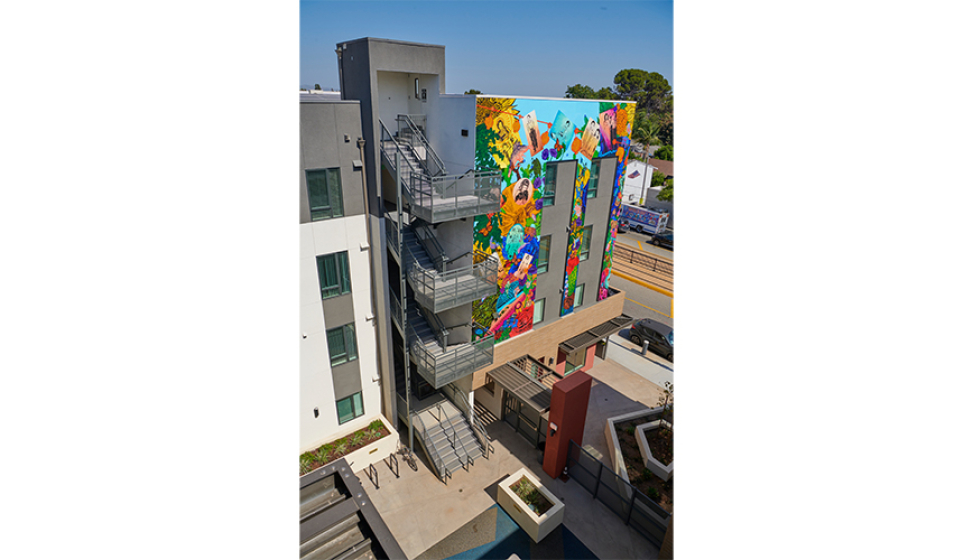
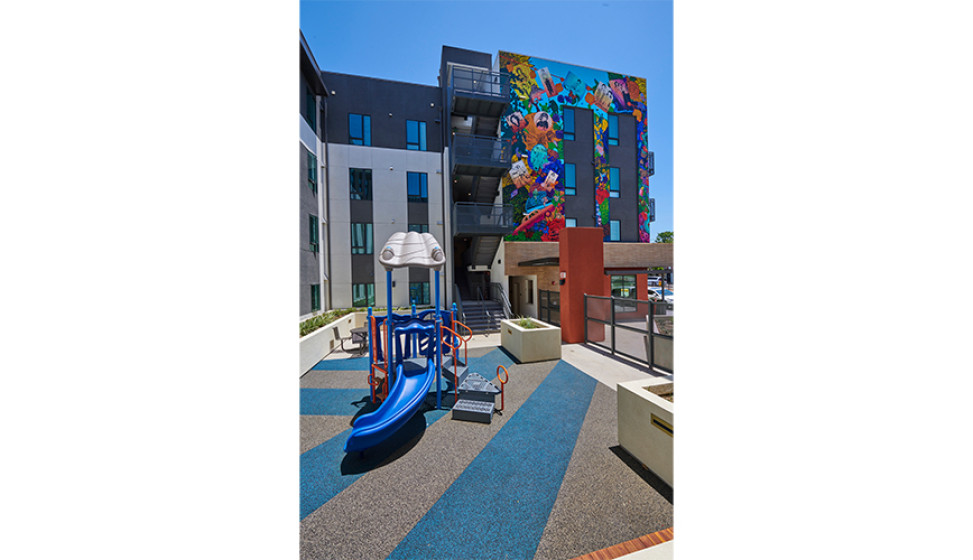
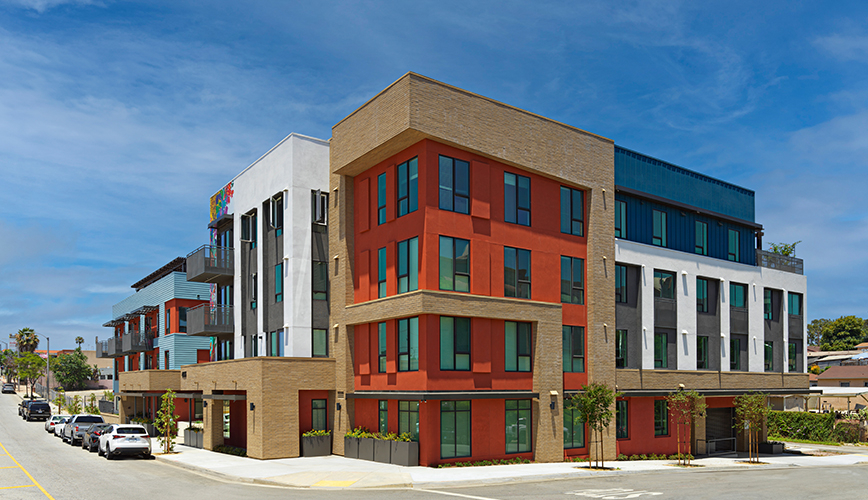
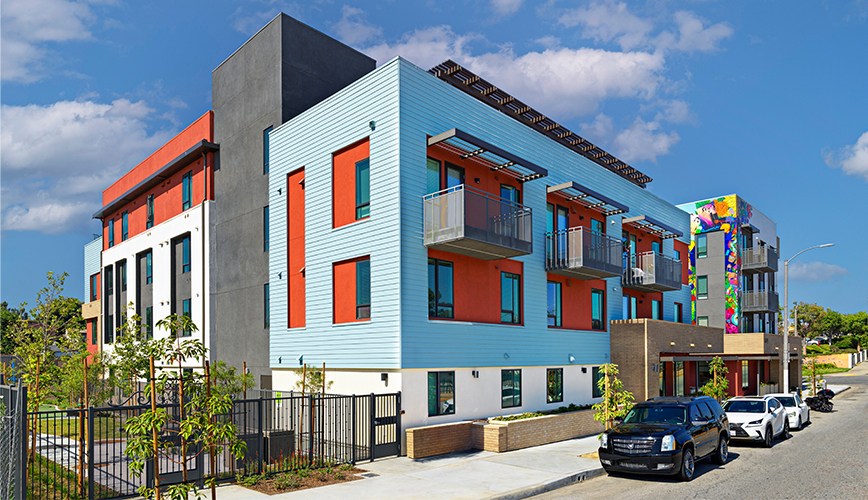
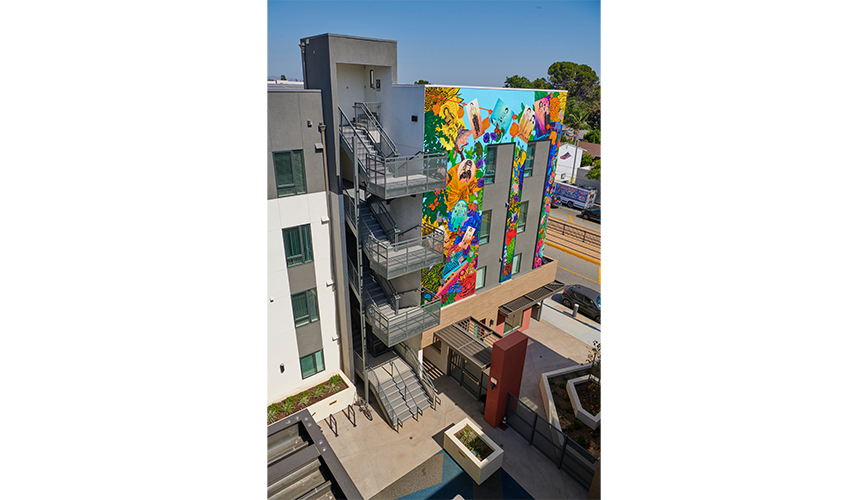
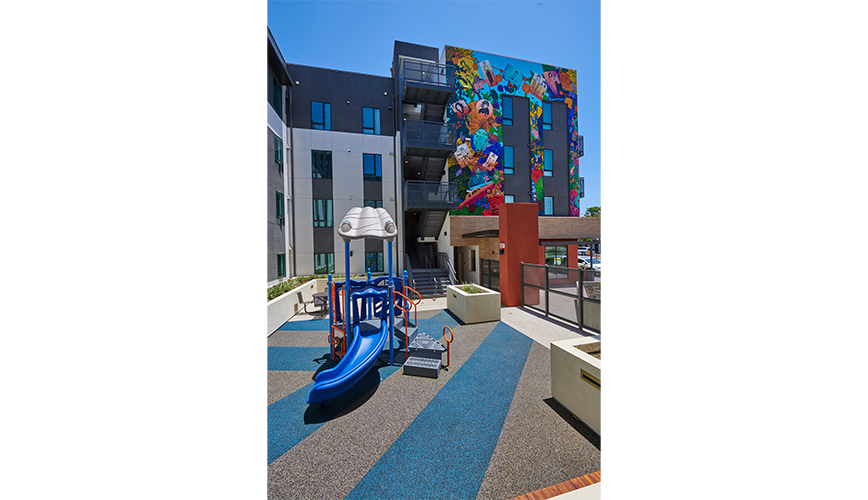
Las Dahlias is a vibrant transit-oriented, affordable multifamily project in East Los Angeles providing 78 apartment homes to low income or previously unhoused individuals and families. The four-story building is conveniently located on the Metro E line, connecting residents to job opportunities in downtown Los Angeles and the San Gabriel Valley. Las Dahlias includes a mix of studios, one- and two-bedroom units. Amenities include an onsite community center, rooftop verandas with gardens, a tot lot, and a forecourt plaza featuring a colorful mural by a local Boyle Heights native and emerging artist that captures the heart of East Los Angeles. Residents benefit from enrichment programs provided by Hope for Housing, and comprehensive case management for those who have experienced homelessness is provided by PATH.

Awards

Close

"K" Residence Hall, Chapman University

  • DESCRIPTION
  • PROCESS
  • GALLERY
RELATED PROJECTS
Next Previous
 

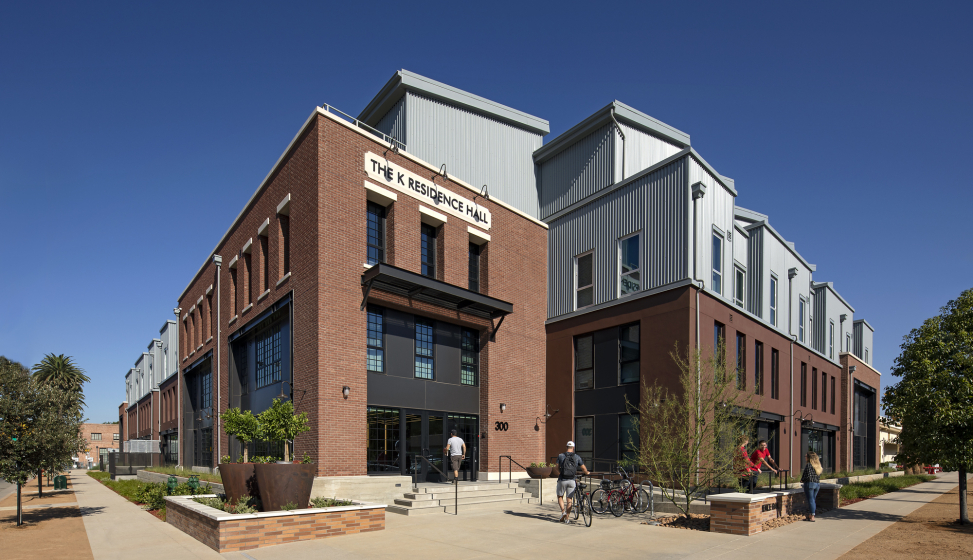
The "K" Residence Hall

Chapman University

Orange, California

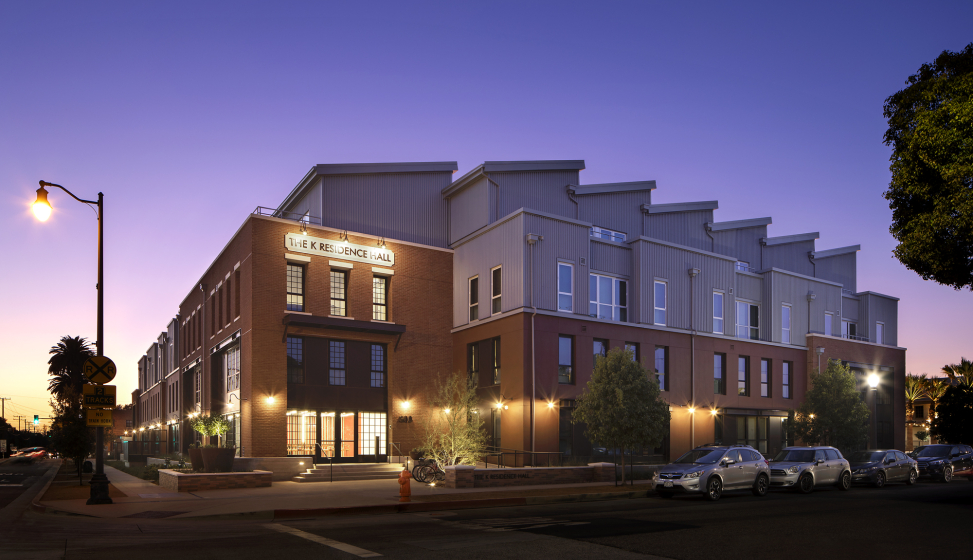
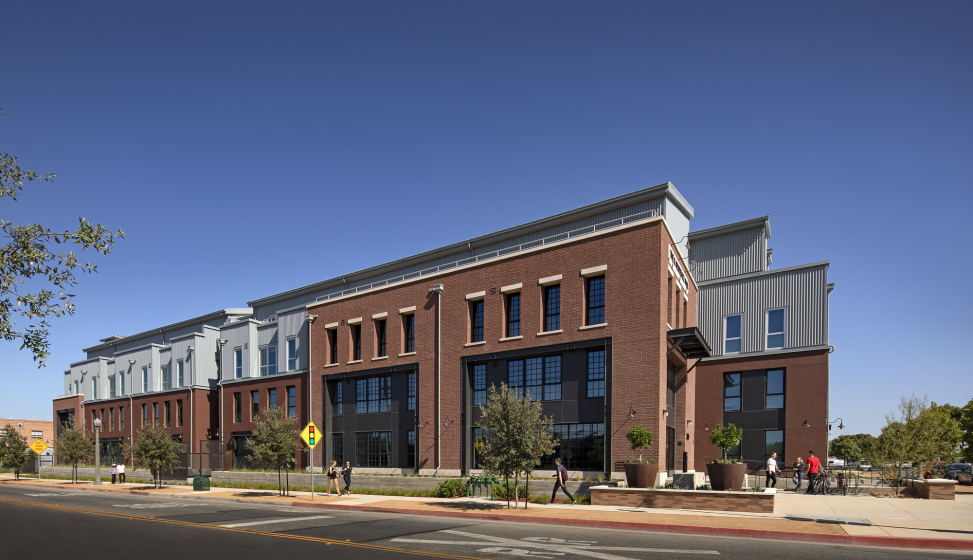
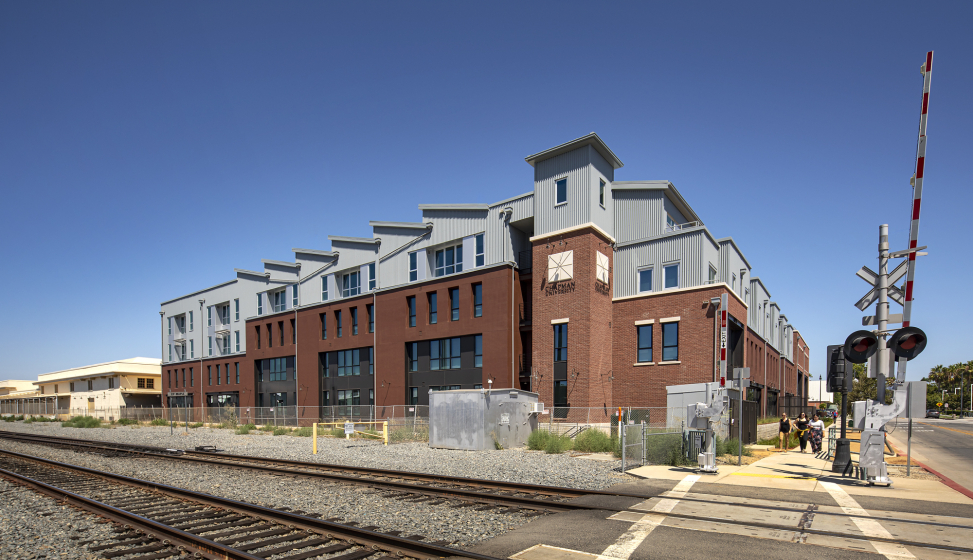
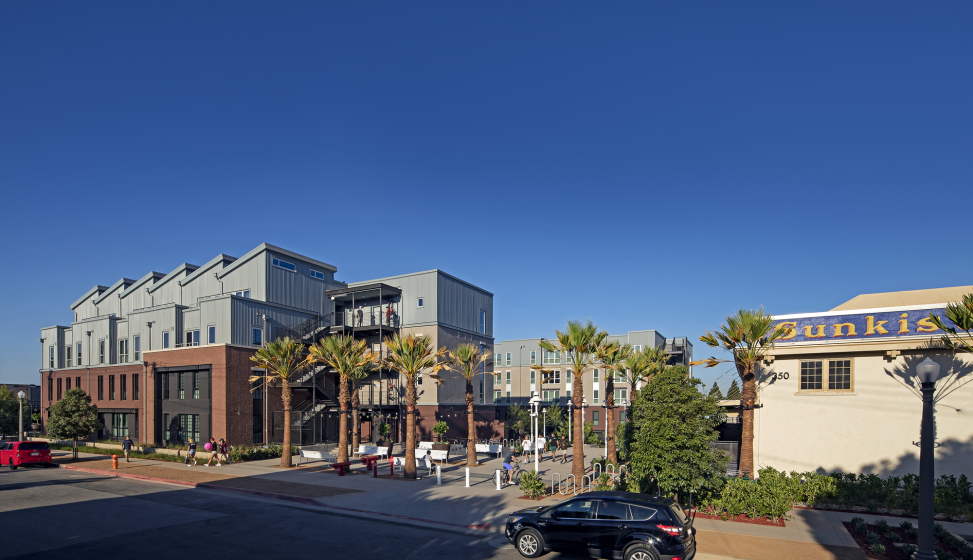
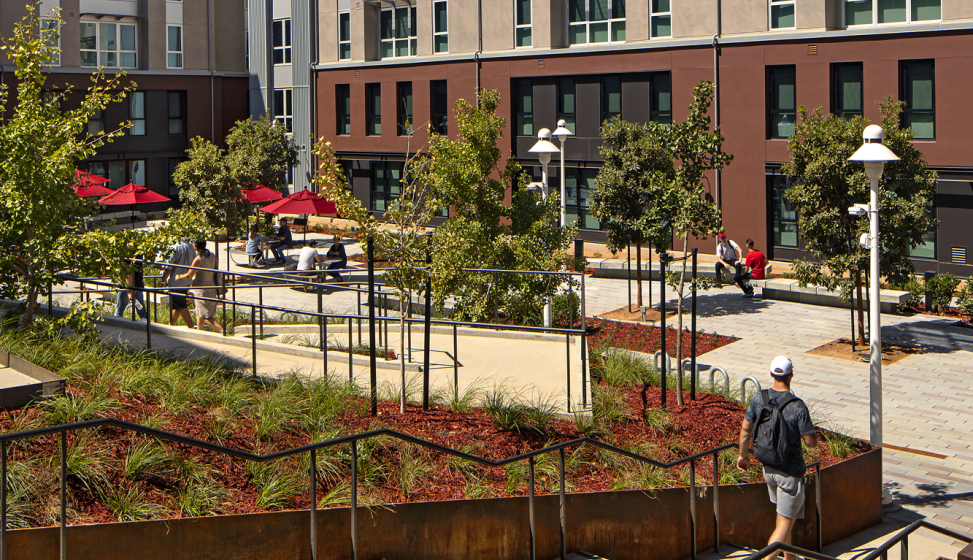
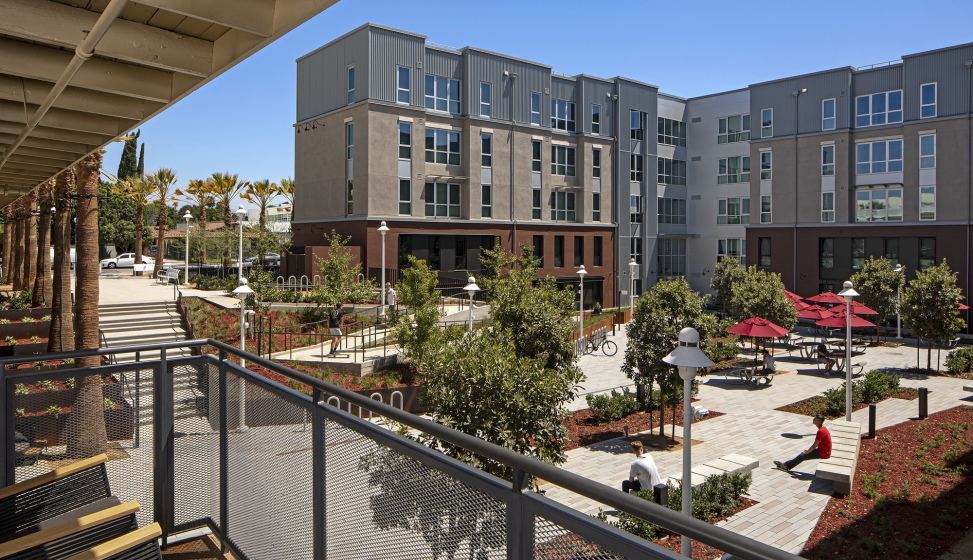
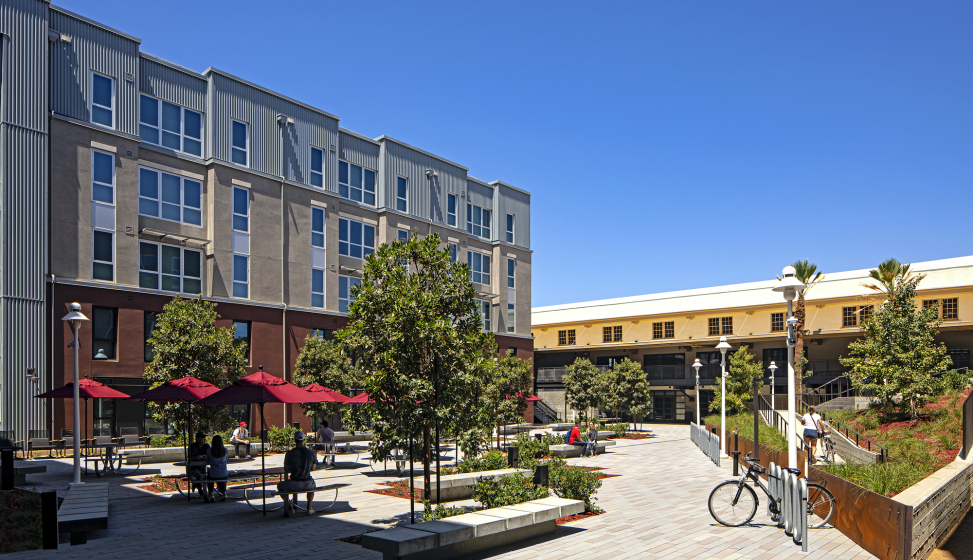
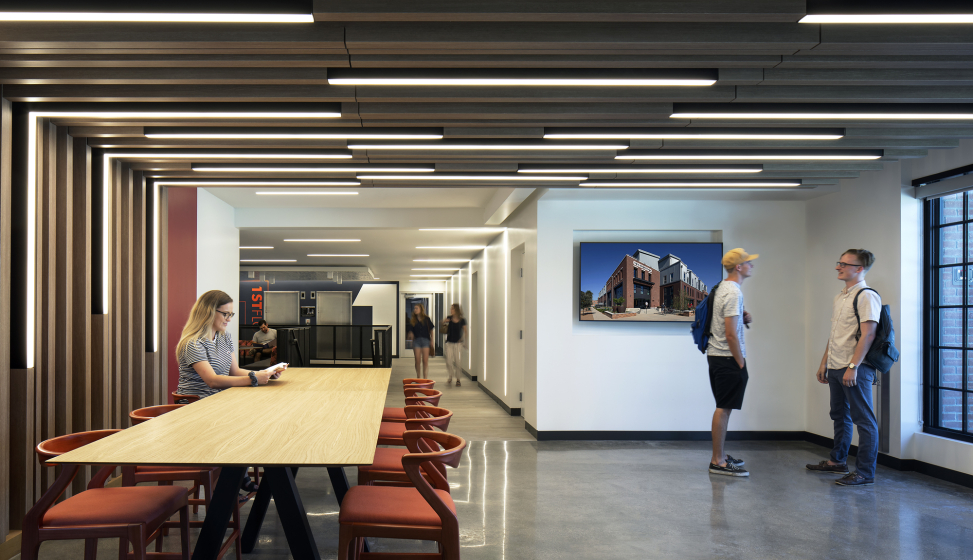
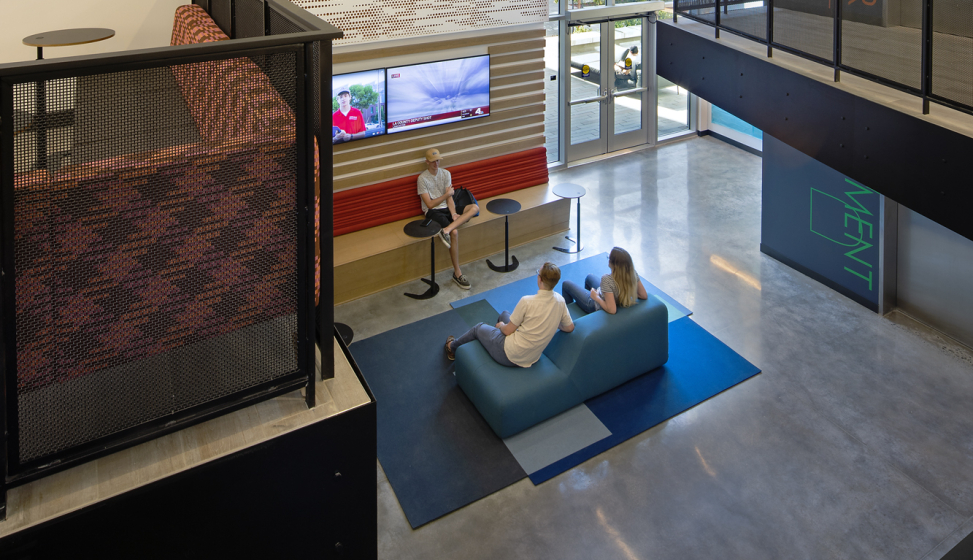
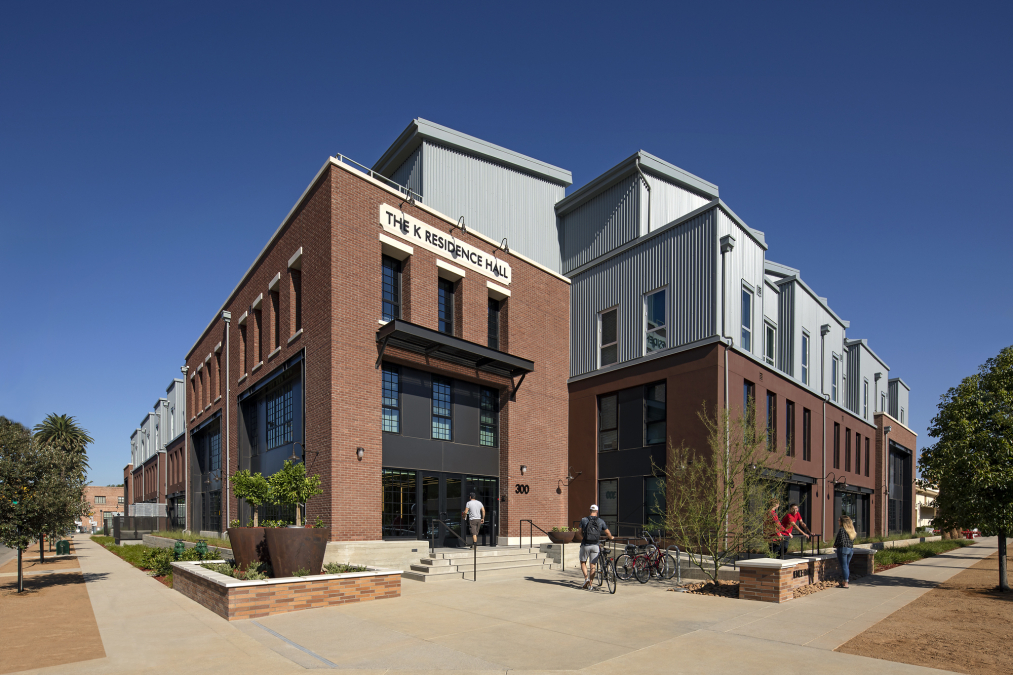
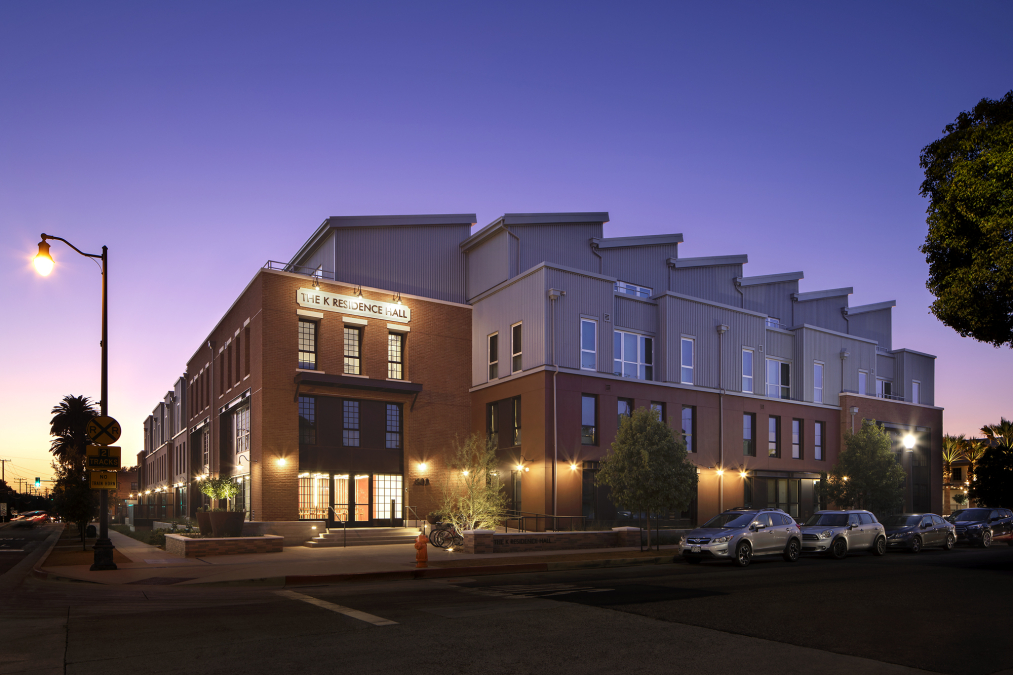
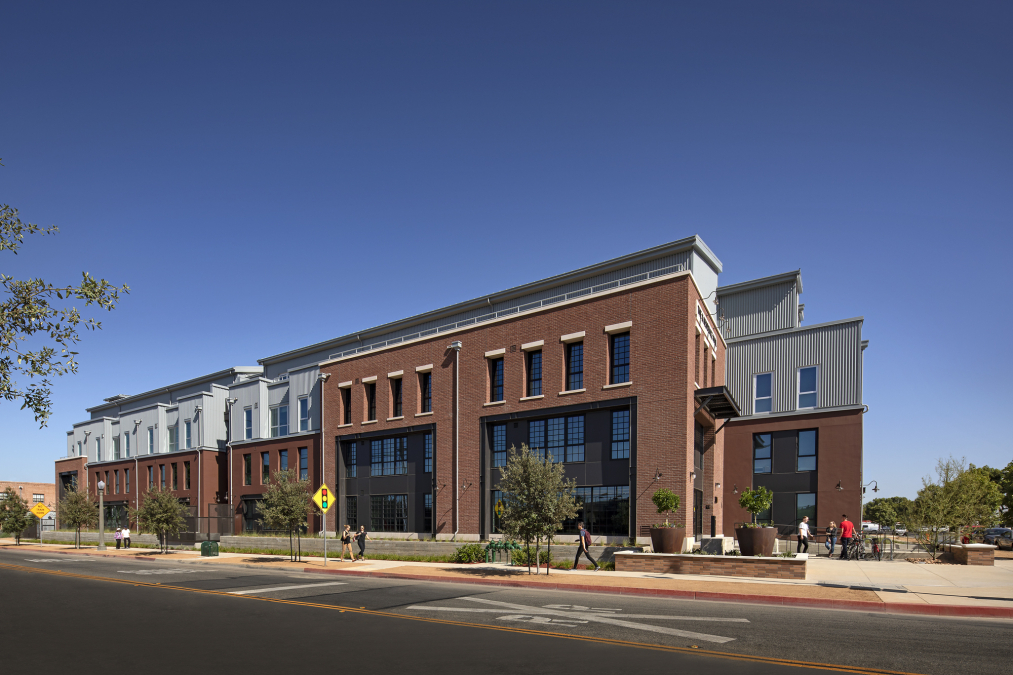
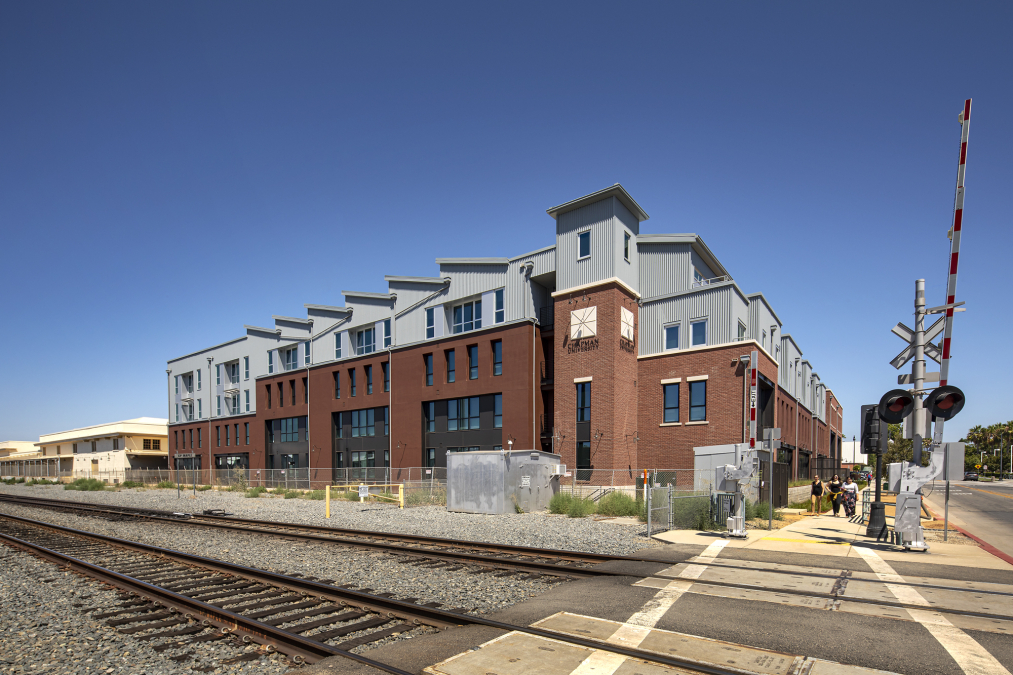
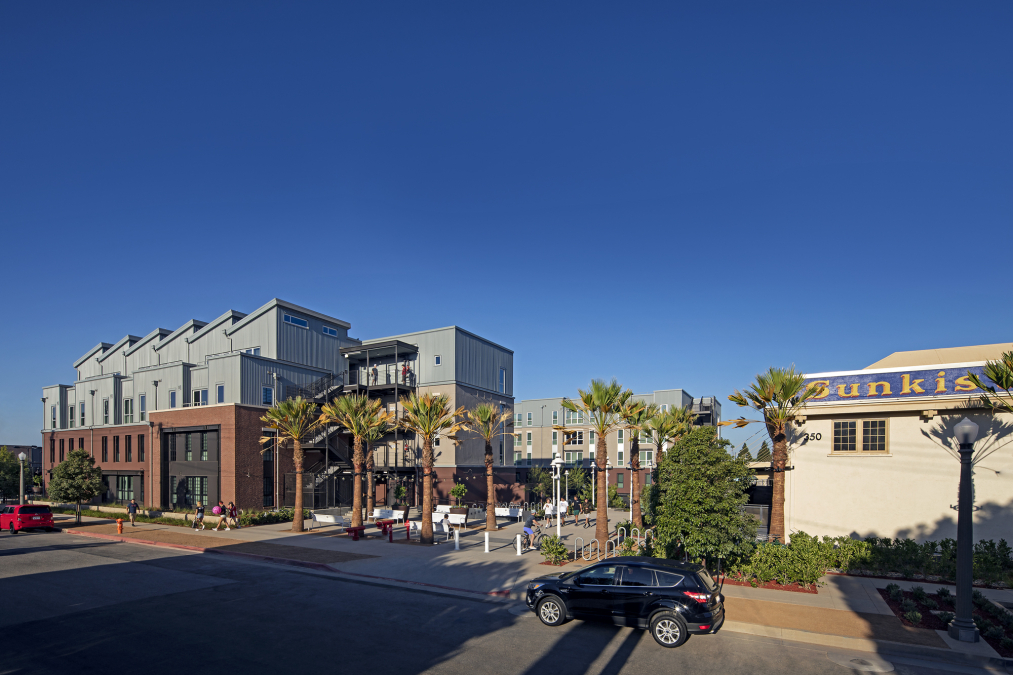
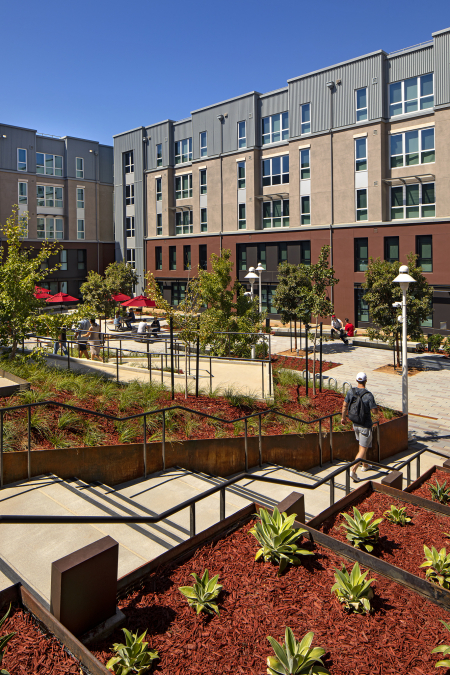
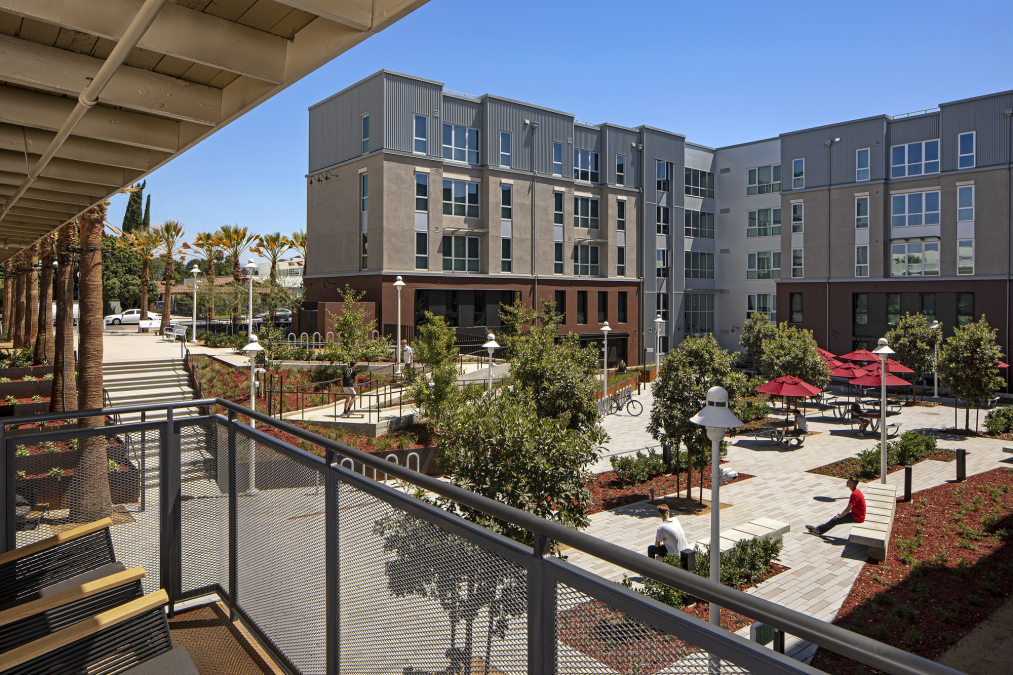
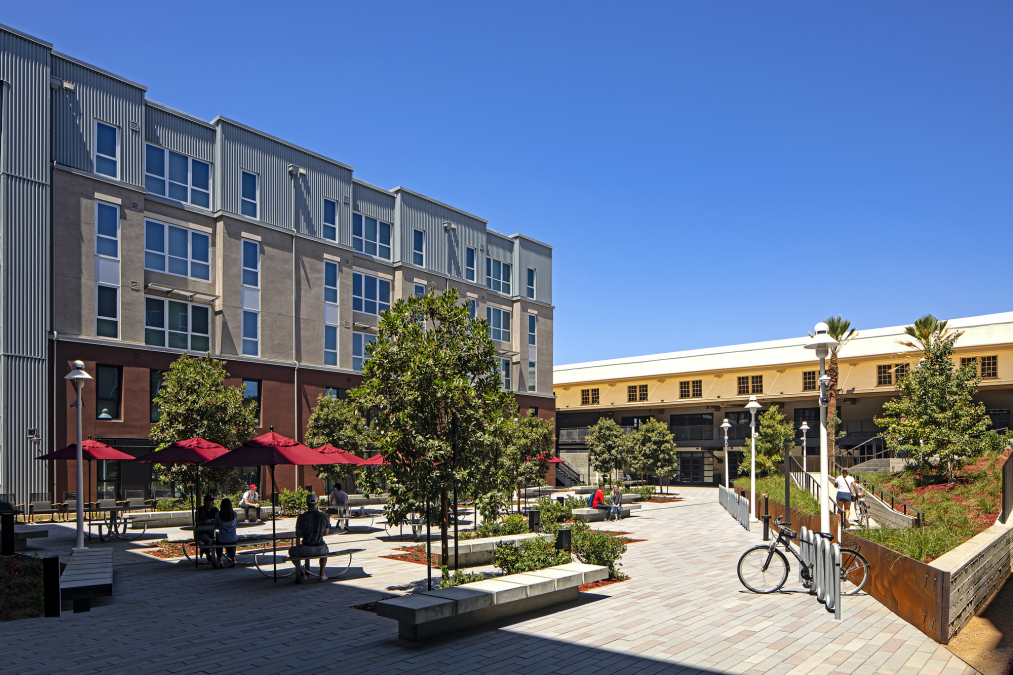
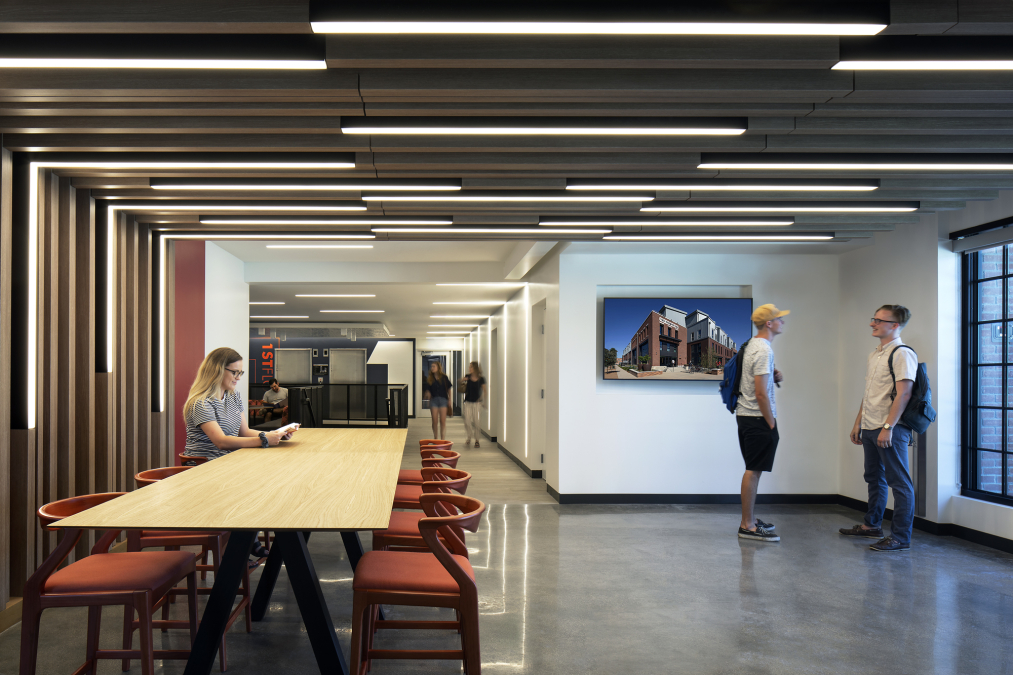
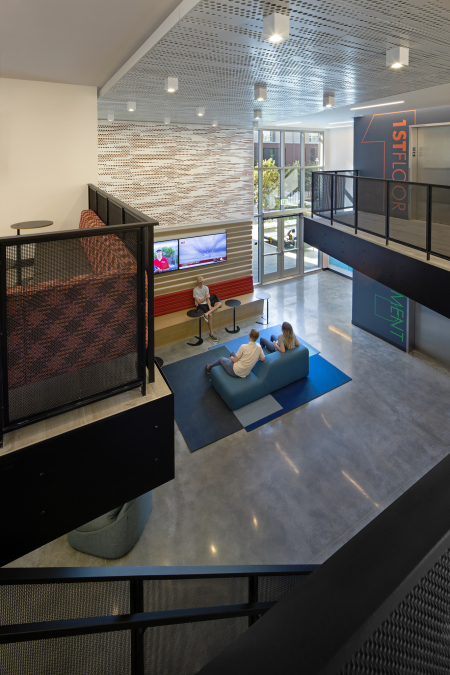
The "K" Residence Hall provides Chapman University with on-campus housing for 400+ students. The new student housing is a key component to an integrated master plan which includes the adaptive reuse of the Villa Park Orchards Packing House built in 1918. The historic Packing House contains an exciting array of student services, academic uses and a museum. A subterranean open central courtyard acts as a circulation hub between the renovated packing house and new residence hall while providing a dynamic outdoor space for students to relax, study and socialize. The new residence hall is differentiated from existing structures on site by its contemporary design and use of exterior brick veneer accents, visually aligning it with other buildings on the Chapman campus. The building has a combination of metal sawtooth and flat roofs, recalling the roof forms of the Packing House.  To compliment the surrounding neighborhood’s agri-industrial context, the exterior walls are clad in metal siding at the upper levels and smooth troweled cement plaster at the lower levels.

Awards Info

Awards

Close
  • 2020 Golden Nugget Award, Merit Award Best Student or Faculty Housing
    • Pacific Coast Builders Conference (PCBC)

Pages

Subscribe to RSS - Higher Education